
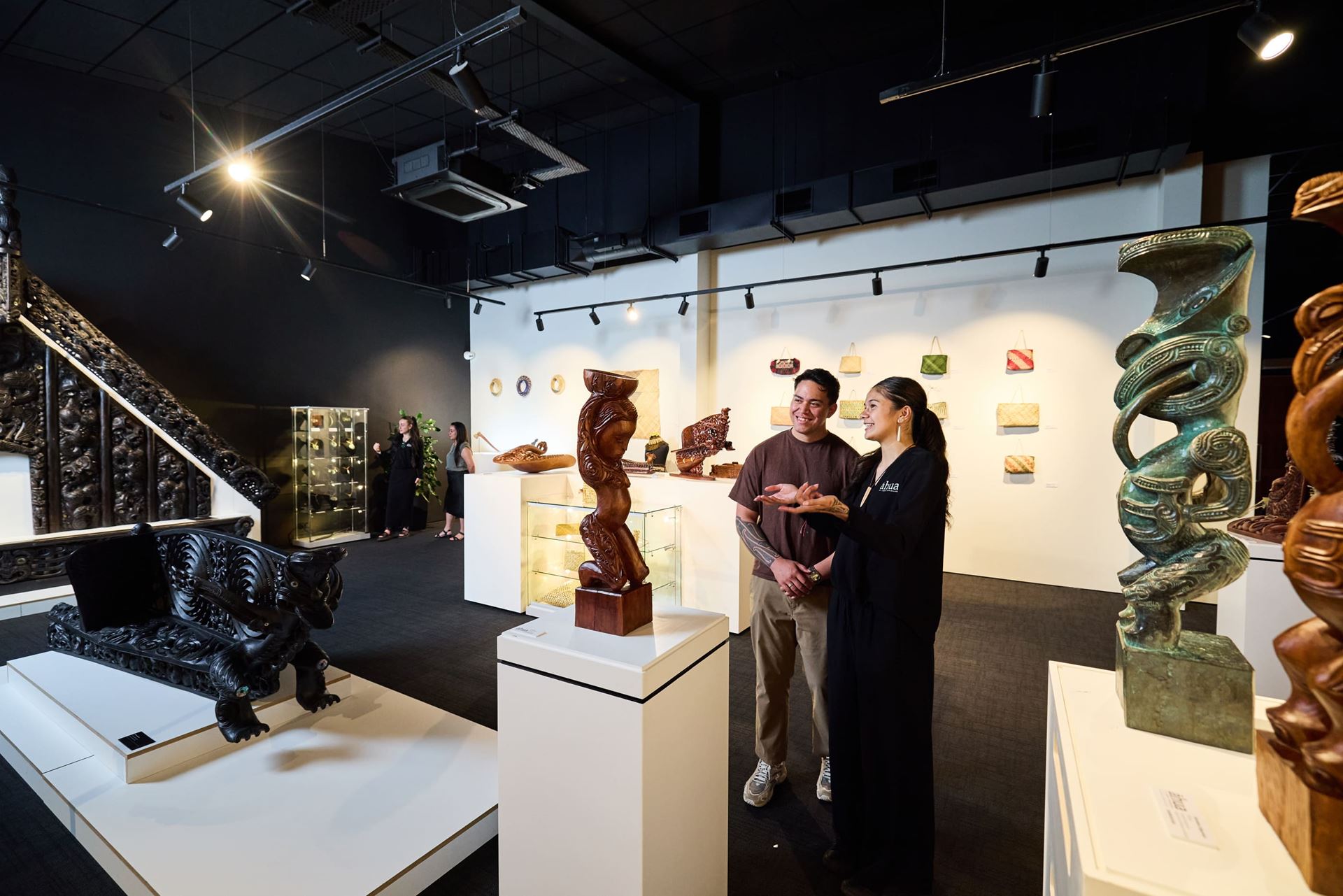
Āhua Gallery
Select Subcategory
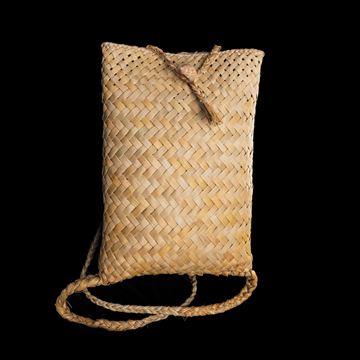
Kete Pikau - 8108KB
Kete Pikau (backpack) is used for carrying personal items.
Material: Harakeke (NZ Flax) & Shell
Measurements: 280mm x 380mm
$380.00
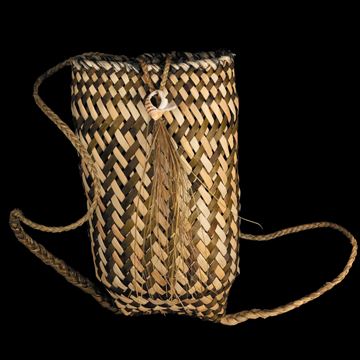
Kete Pikau - 5817RW
Kete Pikau (backpack) are used for carrying personal items.
Material: Harakeke & Shell
Measurements: 430mm x 230mm
$690.00
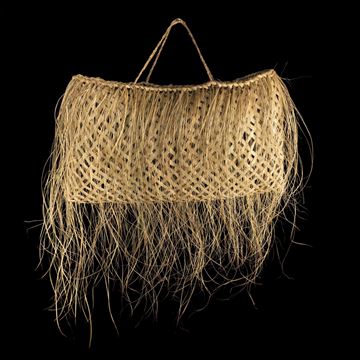
Kete Kai - 5830RW
Kete Kai is a food gathering basket that is typical used to house food from the ocean or the land. Kete kai was used for every type of food that was gathered. You were not allowed to mix land food kete with the ocean food kete as it was tapu. The pattern on this kete kai is taki tahi and the holes are called puareare.
Material: Harakeke
Measurements: 340mm x 490mm
$620.00
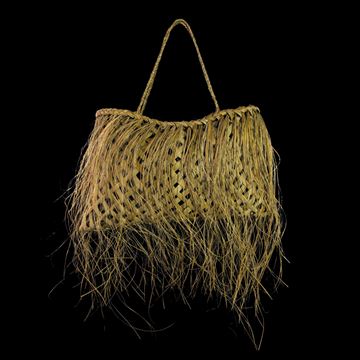
Kete Kai - 5818RW
Kete Kai is a food gathering basket that is typical used to house food from the ocean or the land. Kete kai was used for every type of food that was gathered. You were not allowed to mix land food kete with the ocean food kete as it was tapu. The pattern on this kete kai is taki tahi and the holes are called puareare.
Material: Harakeke
Measurements: 360mm x 200mm
$490.00
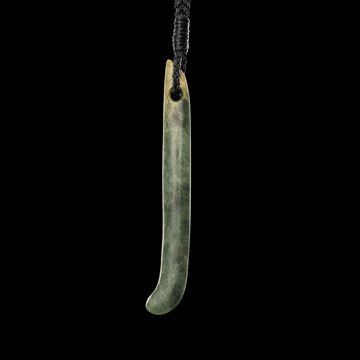
Kapeu - 7156LA
Kapeu are slender adornments with a slight bend at the bottom and were often worn as ear pendants. Kapeu were highly prized and a sign of high rank in Māori society. They are commonly also worn as neck pendants. As with most Māori personal adornments kapeu are often passed down generationally
Material: Pounamu (Matie)
Measurements: 71mm x 9mm
$432.00
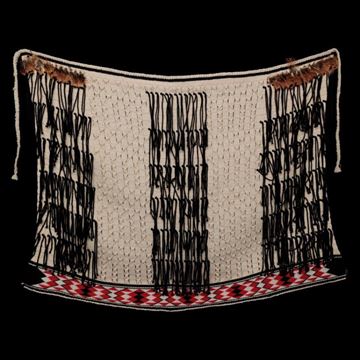
Kākahu (Contemporary) - 1731RA
The kākahu takes inspiration from traditional Māori cloaks. A kākahu is mantle of prestige and honour. This kākahu is made from mirowhiti miro (mop yarn) also incorporating materials that represent different types of kākahu including but not limited to kahu huruhuru (feathers) and tāniko.
Material: Cotton, Mop Yarn, Wool, Feathers
Measurements: 1016mm x 762mm
$4,400.00

Kākahu (Contemporary) - 1630WK
The kākahu takes inspiration from traditional Māori cloaks. A kākahu is mantle of prestige and honour. This kākahu is made from mirowhiti miro (mop yarn) also incorporating materials that represent different types of kākahu including but not limited to kahu huruhuru (feathers) and tāniko.
Material: Cotton, Mop Yarn, Wool, Feathers
Measurements: 875mm x 775mm
$3,900.00
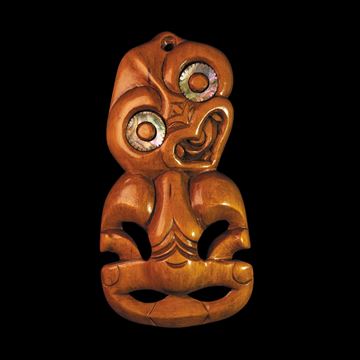
Hei Tiki - 6639CF
Hei tiki are the best known of all Māori adornments. Tiki are symbols of fertility that depict a new-born child. They are often family heirlooms bearing personal names and embodying their wearers lineage. As with most Māori personal adornments, hei tiki are often passed down generationally.
Material: Tōtara (Red Pine)
Measurements: 225mm x 115mm x 25mm
$3,900.00
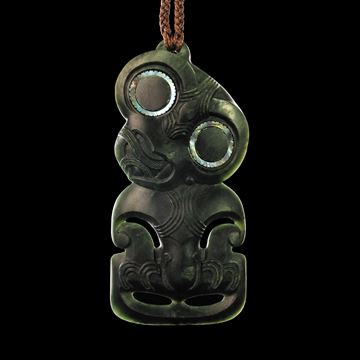
Hei Tiki - 6184KH
Hei tiki are the best known of all Māori adornments. Tiki are symbols of fertility that depict a new-born child. They are often family heirlooms bearing personal names and embodying their wearers lineage. As with most Māori personal adornments, hei tiki are often passed down generationally.
Material: Pounamu (Kawakawa)
Measurements: 140mm x 67mm x 15mm
$3,200.00
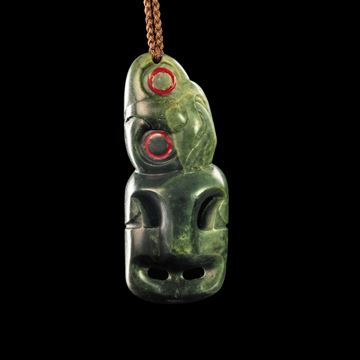
Hei Tiki - 6178KH
Hei tiki are the best known of all Māori adornments. Tiki are symbols of fertility that depict a new-born child. They are often family heirlooms bearing personal names and embodying their wearers lineage. As with most Māori personal adornments, hei tiki are often passed down generationally.
Material: Pounamu (Kawakawa)
Measurements: 95mm x 40mm x 16mm
$2,300.00
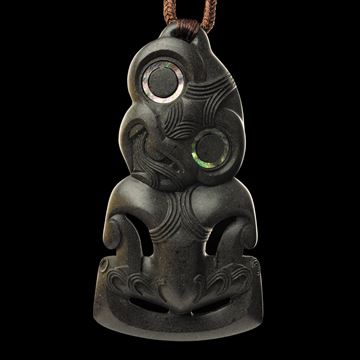
Hei Tiki - 6177KH
Hei tiki are the best known of all Māori adornments. Tiki are symbols of fertility that depict a new-born child. They are often family heirlooms bearing personal names and embodying their wearers lineage. As with most Māori personal adornments, hei tiki are often passed down generationally.
Material: Onewa (Graywacke)
Measurements: 183mm x 101mm x 25mm
$3,500.00
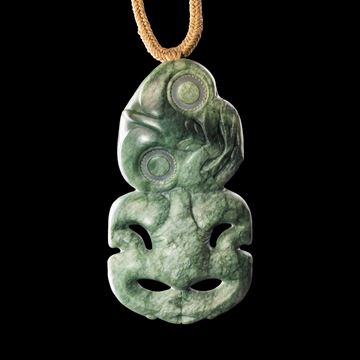
Hei Tiki - 5877SG
Hei tiki are the best known of all Māori adornments. Tiki are symbols of fertility that depict a new-born child. They are often family heirlooms bearing personal names and embodying their wearers lineage. As with most Māori personal adornments, hei tiki are often passed down generationally.
Material: Pounamu (Tokatea)
Measurements: 80mm x 48mm x 8mm
$3,500.00