
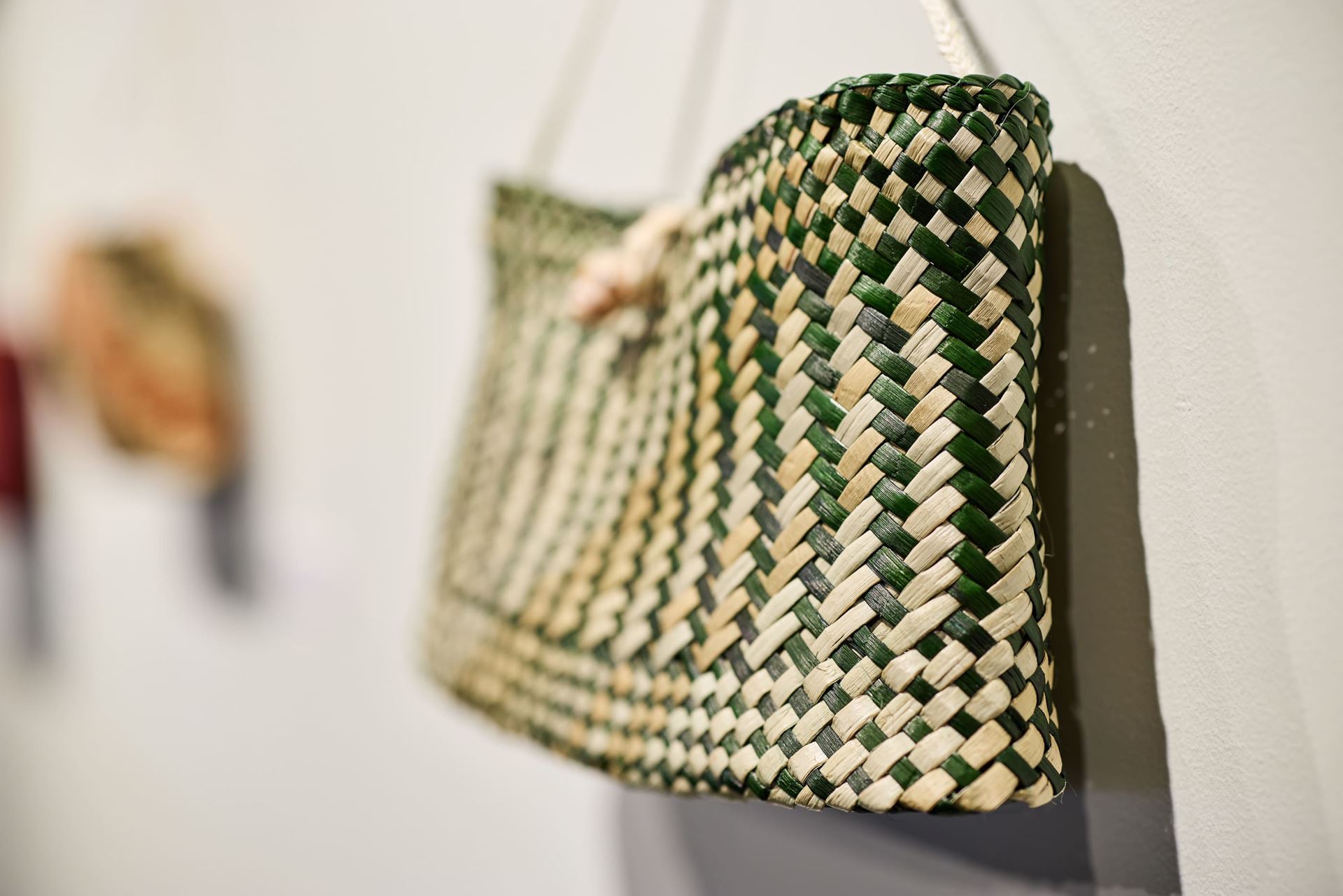
Te Rito, named after the baby shoot at the heart of the flax bush, was built in 1994. At this school, male and female students have the honour of learning traditional Māori weaving techniques, as taught by experienced tutors. This tohu is for 2 years and is 40 hours per week, 47 weeks of the year.
Would you like something custom made especially for you? Commission a piece here
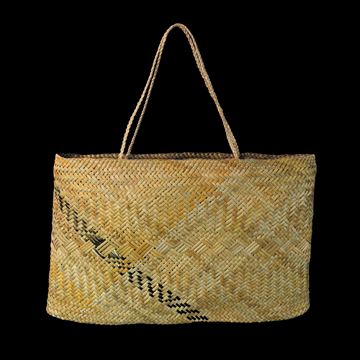
Kete Whakairo - 5907AY
Kete whakairo are woven flax bags of a finer quality than the general utilitarian kete. They are normally made from prepared strips of flax and/or kiekie, some of which have been dyed. Kete whakairo may also feature geometric designs.
Material: Harakeke, Muka & Gold Foil
Measurements: 420mm x 250mm x 60mm
$750.00
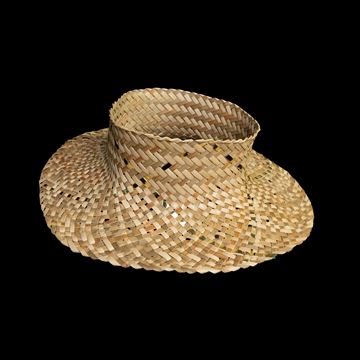
Pōtae - 6779AY
This Pōtae is a contemporary hat woven with traditional Māori weaving methods.
Material: Harakeke & Metallic Foil
Circumference: 21 inches (53cm)
$390.00
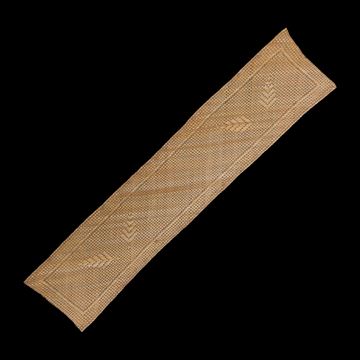
Takapapa - 5129HM
In former times, marae had no wharekai (dining halls) to what we are familiar with today. During those times, specific ‘food mats’ were laid out in the middle of the wharenui (meeting house) and the food for the manuhiri (guest) was placed on them. This takapapa has been weaved to be used as a table runner.
Material: Harakeke
Measurements: 1110mm x 230mm
$750.00
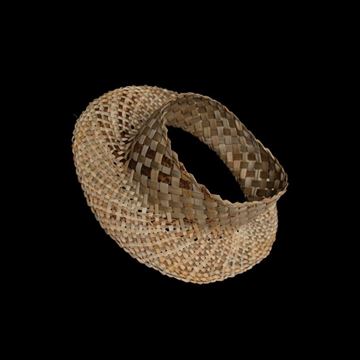
Pōtae - 5143ML
This Pōtae is a contemporary hat woven with traditional Māori weaving methods.
Material: Harakeke
Circumference: 21.5 inches
$250.00
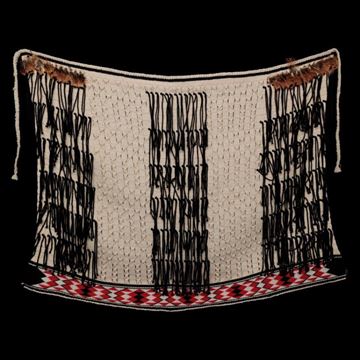
Kākahu (Contemporary) - 1731RA
The kākahu takes inspiration from traditional Māori cloaks. A kākahu is mantle of prestige and honour. This kākahu is made from mirowhiti miro (mop yarn) also incorporating materials that represent different types of kākahu including but not limited to kahu huruhuru (feathers) and tāniko.
Material: Cotton, Mop Yarn, Wool, Feathers
Measurements: 1016mm x 762mm
$4,400.00

Kākahu (Contemporary) - 1630WK
The kākahu takes inspiration from traditional Māori cloaks. A kākahu is mantle of prestige and honour. This kākahu is made from mirowhiti miro (mop yarn) also incorporating materials that represent different types of kākahu including but not limited to kahu huruhuru (feathers) and tāniko.
Material: Cotton, Mop Yarn, Wool, Feathers
Measurements: 875mm x 775mm
$3,900.00