
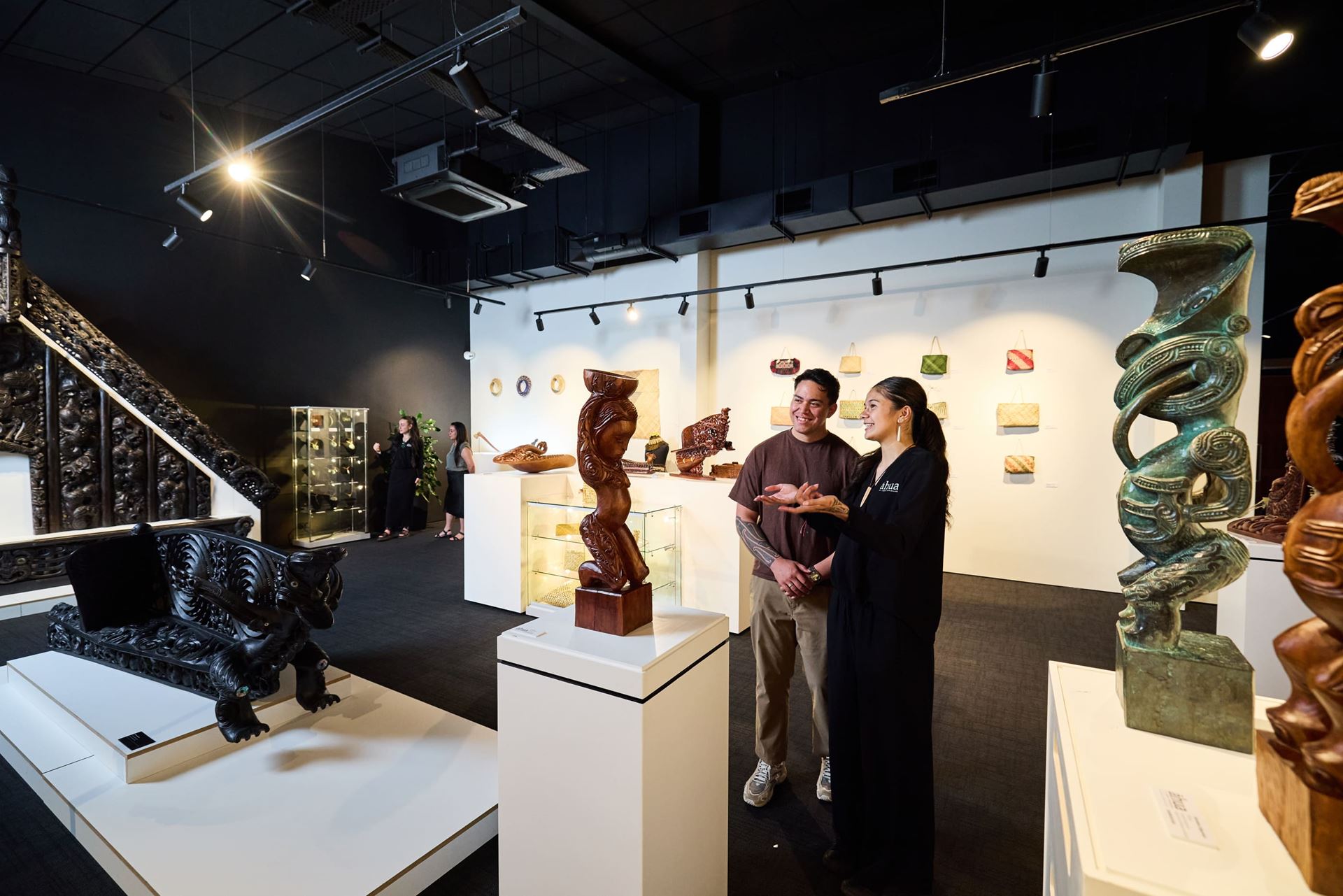
Āhua Gallery
Select Subcategory
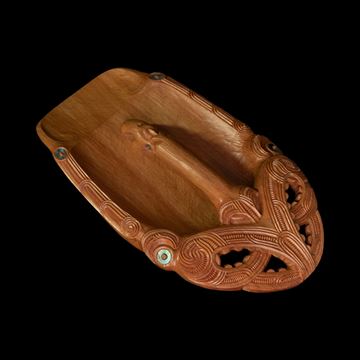
Tīheru (Bailer) - 4793GM
Often the bailer (tatā, tīheru or tā wai) was beautifully carved and some were given a name. In canoe traditions, tribal members still name the bailers used on the original voyaging canoes from Polynesia.
Material: Tōtara
Measurements: 180mm x 300mm x 50mm
$9,900.00
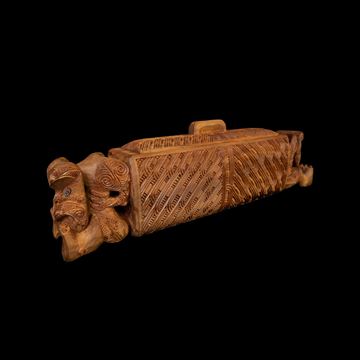
Waka Pungarehu - 2579SL
The Waka Pungarehu (Ash Urn) has two carved tekoteko (statues) positioned at the ends of the waka pungarehu which are carved in the traditional style of whakapakoko, resembling preserved corpses. The surface is intricately adorned with the raperape design, symbolizing the continuous cycle of life and the evolution of death. The pakati and haehae techniques are skillfully carved to enhance the entire waka pungarehu, with the distinctive pakati design known as niho kuri (dog’s teeth) adding a unique touch. The pakati designs feature iroiro (maggots) motifs, symbolizing the natural process of
decomposition when a human body returns to the earth.
Material: Tōtara
Measurements: 450mm x 110mm x 90mm
$10,500.00
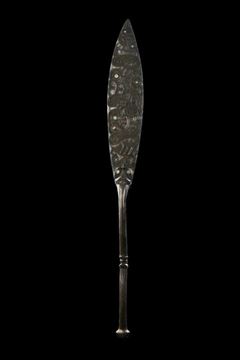
Bronze Hoe
The paddle or hoe was the means of propulsion for the Māori waka (canoe). While the hoe was primarily a paddle, it also doubled as a weapon when the need arose. Carved paddles were the property of the chief and were highly valued. The hoe came in different styles and the handles and blades differed from area to area.
$45,000.00