
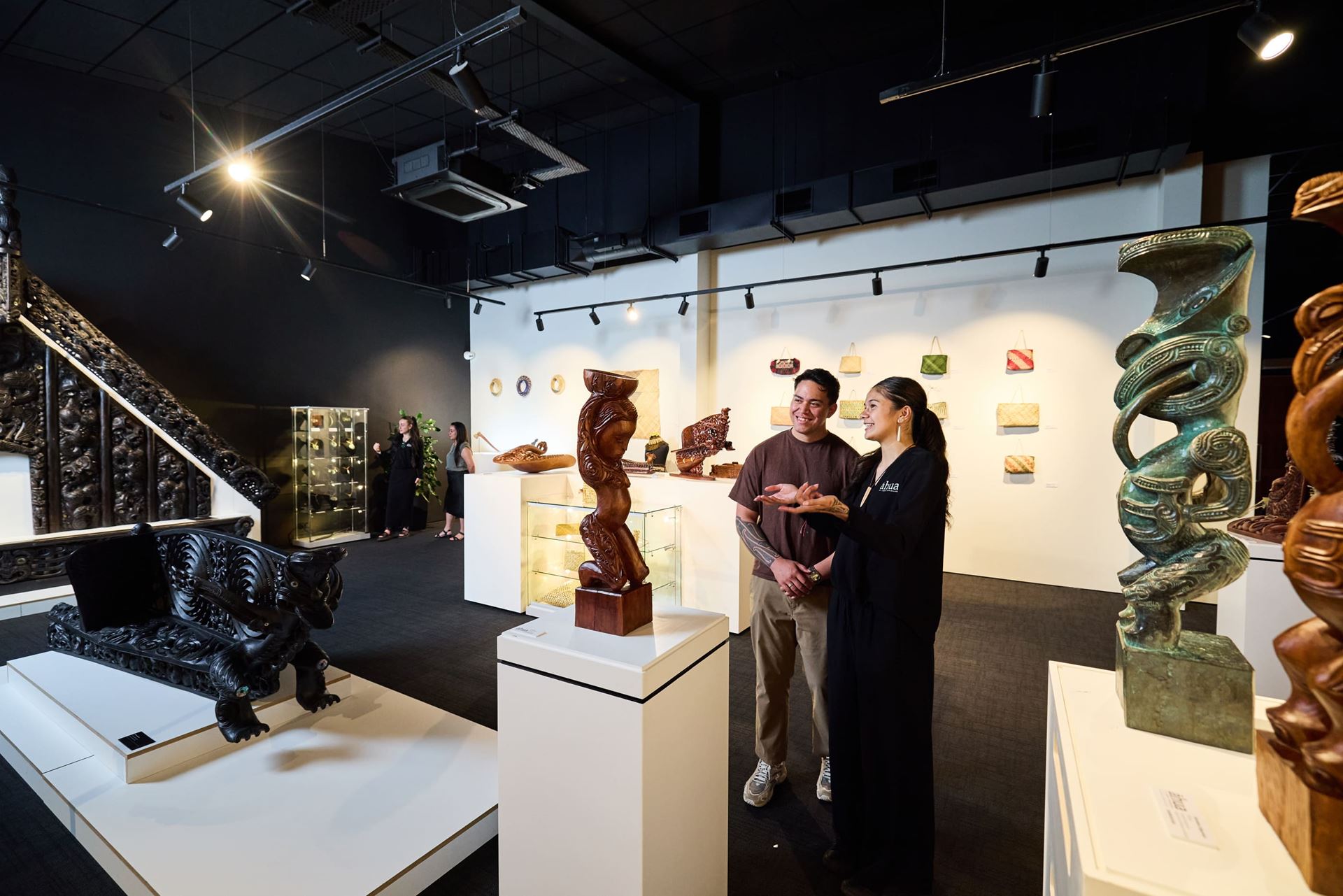
Āhua Gallery
Select Subcategory
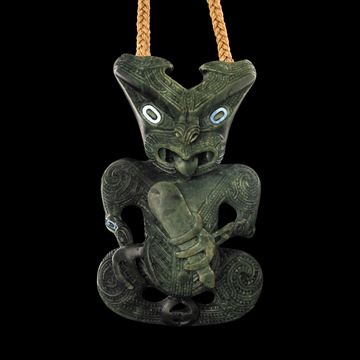
Hei Poupou - 6739PD
The interior walls of the whare whakairo (carved meeting house) are adorned with carvings called poupou. Each poupou in a meeting house connects to a common ancestor, after whom the house was named. Spaced evenly along the inside walls, each poupou supported a rafter panel which extended from the main central ridge, reinforcing the importance of whakapapa (genealogy) to the living generations.
Material: Pounamu (Kawakawa)
Measurements: 112mm x 68mm
$9,244.00
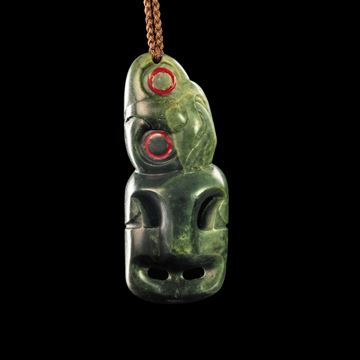
Hei Tiki - 6178KH
Hei tiki are the best known of all Māori adornments. Tiki are symbols of fertility that depict a new-born child. They are often family heirlooms bearing personal names and embodying their wearers lineage. As with most Māori personal adornments, hei tiki are often passed down generationally.
Material: Pounamu (Kawakawa)
Measurements: 95mm x 40mm x 16mm
$2,300.00
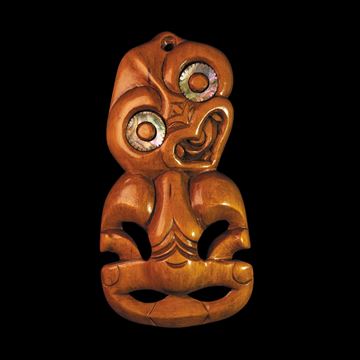
Hei Tiki - 6639CF
Hei tiki are the best known of all Māori adornments. Tiki are symbols of fertility that depict a new-born child. They are often family heirlooms bearing personal names and embodying their wearers lineage. As with most Māori personal adornments, hei tiki are often passed down generationally.
Material: Tōtara (Red Pine)
Measurements: 225mm x 115mm x 25mm
$3,900.00
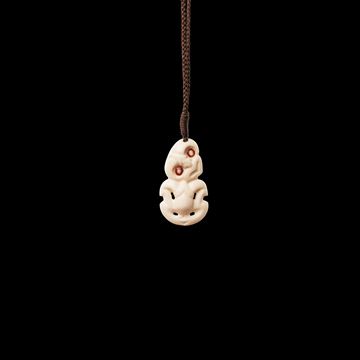
Hei Tiki - 7737HW
Hei tiki are the best known of all Māori adornments. Tiki are symbols of fertility that depict a new-born child. They are often family heirlooms bearing personal names and embodying their wearers lineage. As with most Māori personal adornments, hei tiki are often passed down generationally.
Material: Wheua (Cattle Bone)
Measurements: 41mm x 23mm
$580.00
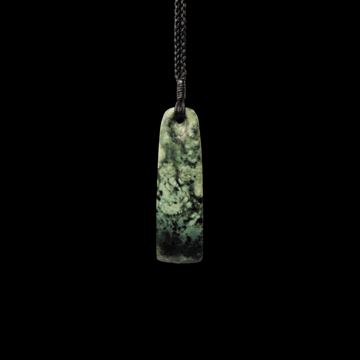
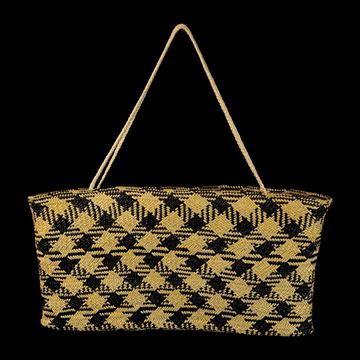
Kete Whakairo - 6002CM
Kete whakairo are woven flax bags of a finer quality than the general utilitarian kete. They are normally made from prepared strips of flax and/or kiekie, some of which have been dyed. Kete whakairo may also feature geometric designs.
Material: Harakeke & Muka
Measurements: 380mm x 180mm x 40mm
$1,900.00
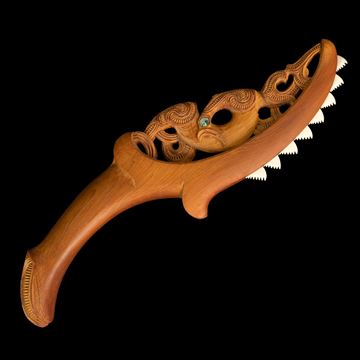
Māripi - CI2895
Māripi are a traditional meat cutting tool. They are fashioned with a wooden handle and sharks’ teeth carved from Kōiwi (beef bone) to create a serrated edge.
Material: Rātā, Kōiwi (Beef Bone) & Pāua (Abalone)
Measurements: 340mm x 100mm x 30mm
$4,200.00
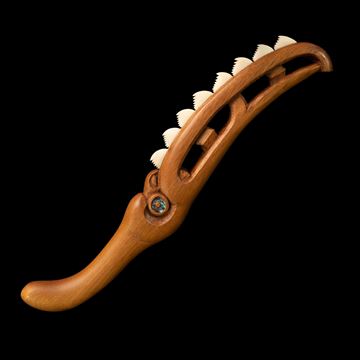
Māripi - CI3233
Māripi are a traditional meat cutting tool. They are fashioned with a wooden handle and sharks’ teeth carved from Kōiwi (beef bone) to create a serrated edge.
Material: Rātā, Kōiwi (Beef Bone) & Pāua (Abalone)
Measurements: 370mm x 60mm x 30mm
$3,500.00
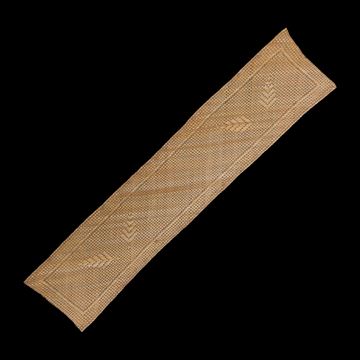
Takapapa - 5129HM
In former times, marae had no wharekai (dining halls) to what we are familiar with today. During those times, specific ‘food mats’ were laid out in the middle of the wharenui (meeting house) and the food for the manuhiri (guest) was placed on them. This takapapa has been weaved to be used as a table runner.
Material: Harakeke
Measurements: 1110mm x 230mm
$750.00
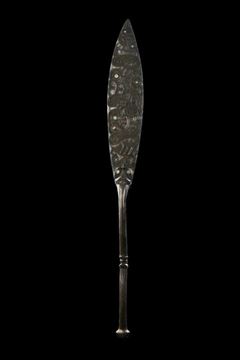
Bronze Hoe
The paddle or hoe was the means of propulsion for the Māori waka (canoe). While the hoe was primarily a paddle, it also doubled as a weapon when the need arose. Carved paddles were the property of the chief and were highly valued. The hoe came in different styles and the handles and blades differed from area to area.
$45,000.00
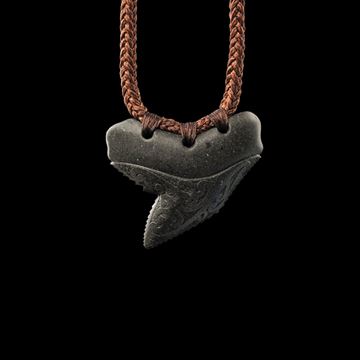
Niho Mango - 6742PD
Shark teeth were highly sought after to wear as a symbol of prestige for personal adornment. They were reflective of the mana of the shark itself. .
Material: Ōnewa (NZ Greywacke)
Measurements: 47mm X 55mm
$563.00
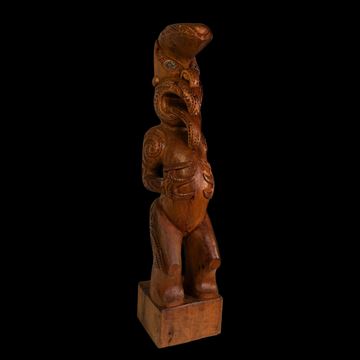
Tekoteko - 4813HG
The tekoteko is a stylised representation of the main progenitor of a tribe and is the most focal point of the whare whakairo (carved tribal meeting house). They can be found – on traditional meeting houses – either at the highest point at the front apex of the roof or at the front central post. They can also be found at the base of the poutokomanawa (the main central ridge support post) of the house.
Material: Tōtara
Measurements: 865mm x 210mm x 180mm
$4,200.00