Āhua Gallery
Select Subcategory
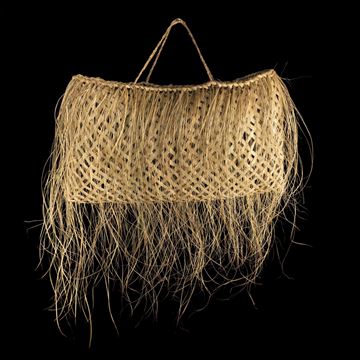
Kete Kai - 5830RW
Kete Kai is a food gathering basket that is typical used to house food from the ocean or the land. Kete kai was used for every type of food that was gathered. You were not allowed to mix land food kete with the ocean food kete as it was tapu. The pattern on this kete kai is taki tahi and the holes are called puareare.
Material: Harakeke
Measurements: 340mm x 490mm
$620.00
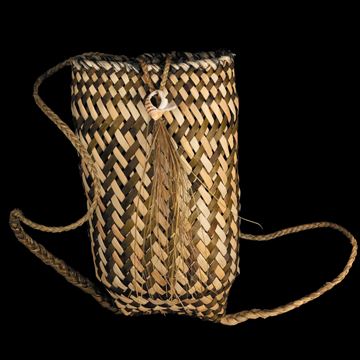
Kete Pikau - 5817RW
Kete Pikau (backpack) are used for carrying personal items.
Material: Harakeke & Shell
Measurements: 430mm x 230mm
$690.00
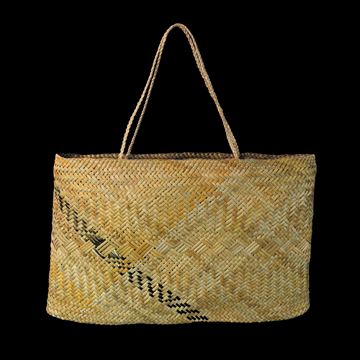
Kete Whakairo - 5907AY
Kete whakairo are woven flax bags of a finer quality than the general utilitarian kete. They are normally made from prepared strips of flax and/or kiekie, some of which have been dyed. Kete whakairo may also feature geometric designs.
Material: Harakeke, Muka & Gold Foil
Measurements: 420mm x 250mm x 60mm
$750.00
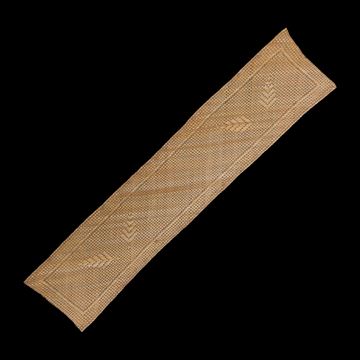
Takapapa - 5129HM
In former times, marae had no wharekai (dining halls) to what we are familiar with today. During those times, specific ‘food mats’ were laid out in the middle of the wharenui (meeting house) and the food for the manuhiri (guest) was placed on them. This takapapa has been weaved to be used as a table runner.
Material: Harakeke
Measurements: 1110mm x 230mm
$750.00
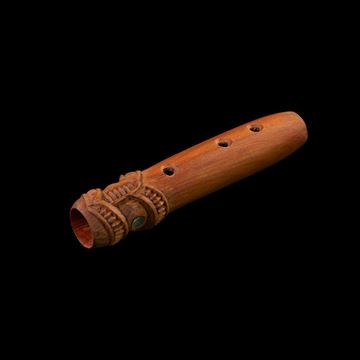
Kōauau 5859HY
Kōauau are part of the flute family and come to us from the atua (spiritual entity) of flute music Hine Raukatauri. Kōauau is also the name for a species of hollow kelp, which can also be used to make instruments. Kōauau are made from a variety of different materials including wood, bone or sometimes stone. Most Kōauau have 3 wenewene (finger holes) although there are several older examples that have 4 or more. The kaiwhakangāwari is the wenewene closest to the mouth, the kaiwhakahī is the middle wenewene and the kaiwhakakaha is the wenewene closest to the distal end.
There are many uses for kōauau. In Māori tradition, birds are sometimes seen as important messengers from the spirit world. Kōauau have a reputation of attracting the native birds of Aotearoa. The birds will often interact with the beautiful melody from the kōauau, giving us a glimpse of the spiritual aspects of the kōauau song.
Material: Mataī (NZ Native)
Measurements: 123mm x 26mm x 26mm
$850.00
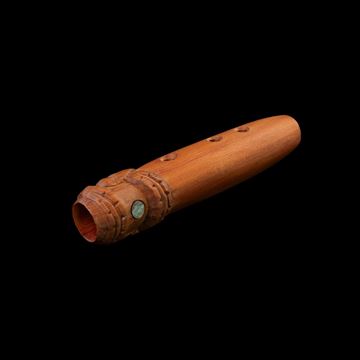
Kōauau 4439HY
Kōauau are part of the flute family and come to us from the atua (spiritual entity) of flute music Hine Raukatauri. Kōauau is also the name for a species of hollow kelp, which can also be used to make instruments. Kōauau are made from a variety of different materials including wood, bone or sometimes stone. Most kōauau have three wenewene (finger holes) although there are several older examples that have four or more. The kaiwhakangāwari is the wenewene closest to the mouth, the kaiwhakahī is the middle wenewene and the kaiwhakakaha is the wenewene closest to the distal end.
There are many uses for kōauau. In Māori tradition, birds are sometimes seen as important messengers from the spirit world. Kōauau have a reputation of attracting the native birds of Aotearoa. The birds will often interact with the beautiful melody from the kōauau, giving us a glimpse of the spiritual aspects of the kōauau song.
Material: Mataī (NZ Native)
Measurements: 123mm x 26mm x 26mm
$850.00
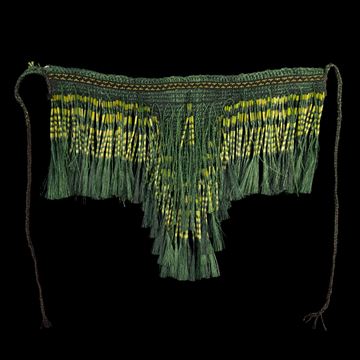
Maro - 4905TE
The maro is a frontal apron tied around the waist and is a traditional garment that is worn by both men and woman. This maro has been fashioned with strands of muka fibre within the flax.
Material: Harakeke & Muka
Measurements: 680mm x 480mm
$1,395.00
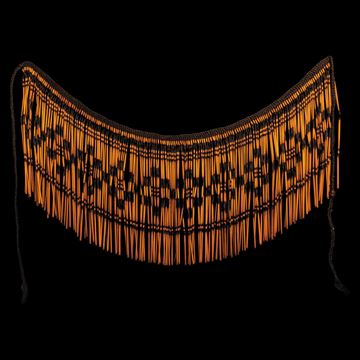
Piupiu (Tāne) - 5832RW
The word 'piupiu' means 'to swing’ and is also the name for a skirt with free-hanging strands. Piupiu can be worn either around the waist or across one shoulder. They were made in many types of material and styles.
Material: Harakeke & Muka
Measurements: 1100mm x 420mm or 43 inches
$1,890.00
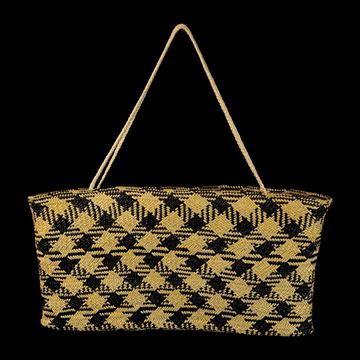
Kete Whakairo - 6002CM
Kete whakairo are woven flax bags of a finer quality than the general utilitarian kete. They are normally made from prepared strips of flax and/or kiekie, some of which have been dyed. Kete whakairo may also feature geometric designs.
Material: Harakeke & Muka
Measurements: 380mm x 180mm x 40mm
$1,900.00
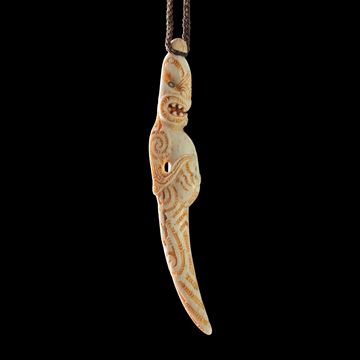
Aurei - 5474MA
Aurei were customarily used as a pin for fastening cloaks and may be made from bone, stone, wood or shell. They may also have been worn through the ear as an earring or around the neck as a pendant. Aurei are still commonly worn as pendants and earrings and as with most Māori personal adornments, are often passed down generationally.
Material: Parāoa (Whalebone)
Measurements: 142mm x 15mm x 23mm
$1,900.00
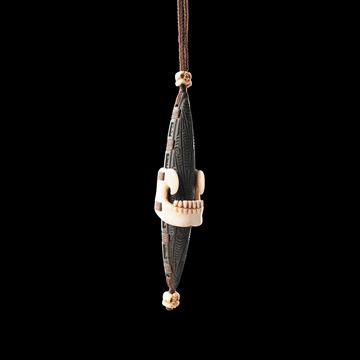
Whakakai - 4379TO
Material: Ōnewa (NZ Greywacke) & Koiwi (Beef Bone)
Measurements: 190mm x 35mm x 30mm
$2,090.00