
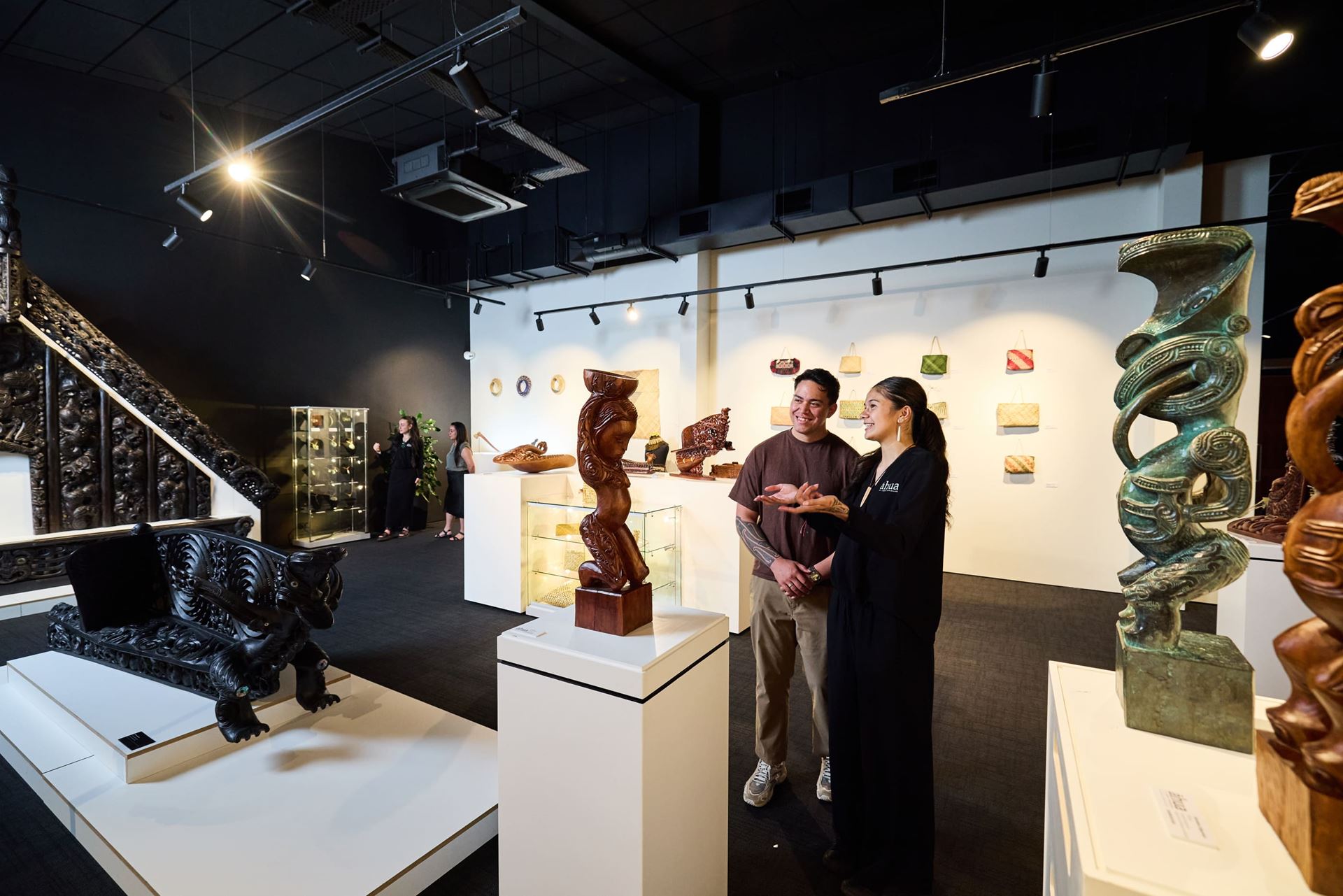
Āhua Gallery
Select Subcategory
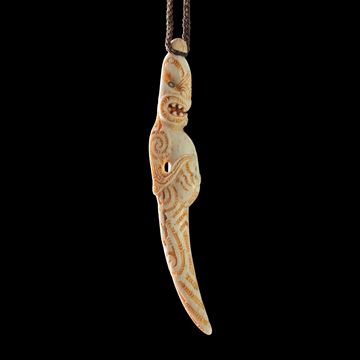
Aurei - 5474MA
Aurei were customarily used as a pin for fastening cloaks and may be made from bone, stone, wood or shell. They may also have been worn through the ear as an earring or around the neck as a pendant. Aurei are still commonly worn as pendants and earrings and as with most Māori personal adornments, are often passed down generationally.
Material: Parāoa (Whalebone)
Measurements: 142mm x 15mm x 23mm
$1,900.00
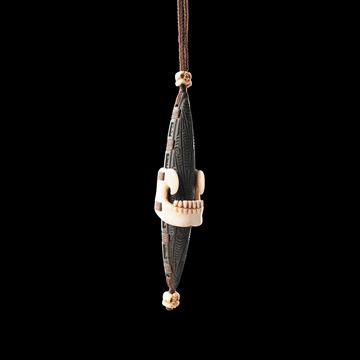
Whakakai - 4379TO
Material: Ōnewa (NZ Greywacke) & Koiwi (Beef Bone)
Measurements: 190mm x 35mm x 30mm
$2,090.00
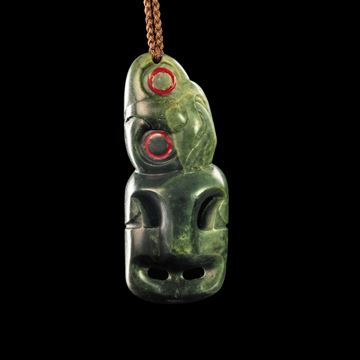
Hei Tiki - 6178KH
Hei tiki are the best known of all Māori adornments. Tiki are symbols of fertility that depict a new-born child. They are often family heirlooms bearing personal names and embodying their wearers lineage. As with most Māori personal adornments, hei tiki are often passed down generationally.
Material: Pounamu (Kawakawa)
Measurements: 95mm x 40mm x 16mm
$2,300.00
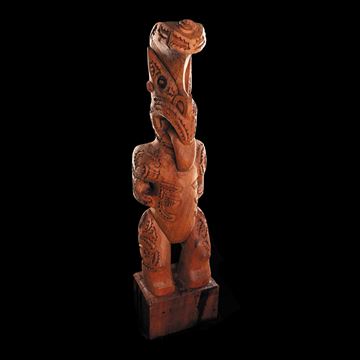
Tekoteko - 6359HH
The tekoteko is a stylised representation of the main progenitor of a tribe and is the most focal point of the whare whakairo (carved tribal meeting house). They can be found – on traditional meeting houses – either at the highest point at the front apex of the roof or at the front central post. They can also be found at the base of the poutokomanawa (the main central ridge support post) of the house.
Material: Tōtara
Measurements: 150mm x 100mm x 580mm
$2,500.00
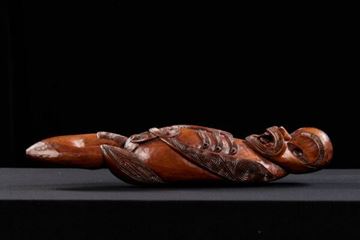
Waka Tūpāpaku - CI3348
A waka tūpāpaku is a box used for containing the bones of a person of high rank after they had been exposed on the atamira platform, the flesh removed and the bones anointed with oil and red ochre, placed in a waka tūpāpaku and taken to a tribal buriel cave.
Material: Tōtara
Measurements: 580mm x 140mm x 110mm
$2,500.00
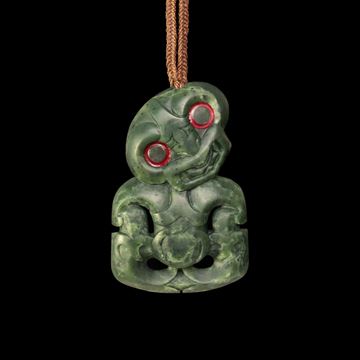
Hei Tiki - 6717PD
Hei tiki are the best known of all Māori adornments. Tiki are symbols of fertility that depict a new-born child. They are often family heirlooms bearing personal names and embodying their wearers lineage. As with most Māori personal adornments, hei tiki are often passed down generationally.
Material: Pounamu (Kawakawa)
Measurements: 88mm x 58mm
$2,600.00
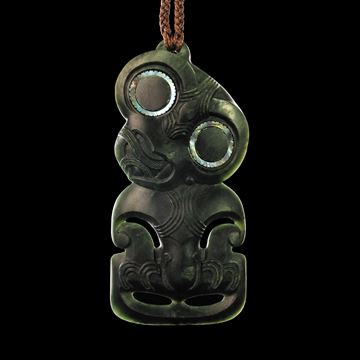
Hei Tiki - 6184KH
Hei tiki are the best known of all Māori adornments. Tiki are symbols of fertility that depict a new-born child. They are often family heirlooms bearing personal names and embodying their wearers lineage. As with most Māori personal adornments, hei tiki are often passed down generationally.
Material: Pounamu (Kawakawa)
Measurements: 140mm x 67mm x 15mm
$3,200.00
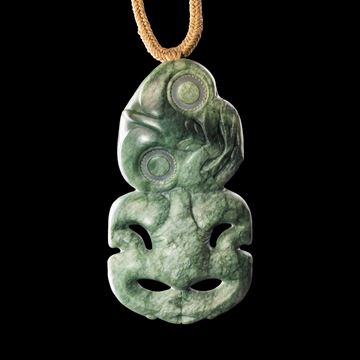
Hei Tiki - 5877SG
Hei tiki are the best known of all Māori adornments. Tiki are symbols of fertility that depict a new-born child. They are often family heirlooms bearing personal names and embodying their wearers lineage. As with most Māori personal adornments, hei tiki are often passed down generationally.
Material: Pounamu (Tokatea)
Measurements: 80mm x 48mm x 8mm
$3,500.00
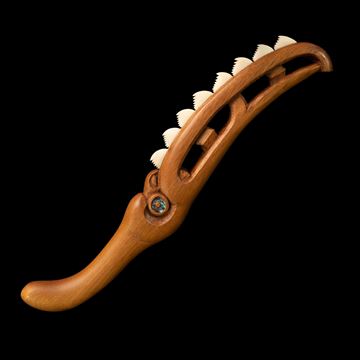
Māripi - CI3233
Māripi are a traditional meat cutting tool. They are fashioned with a wooden handle and sharks’ teeth carved from Kōiwi (beef bone) to create a serrated edge.
Material: Rātā, Kōiwi (Beef Bone) & Pāua (Abalone)
Measurements: 370mm x 60mm x 30mm
$3,500.00
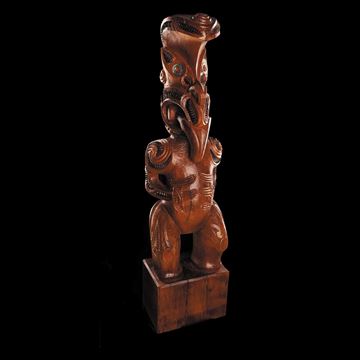
Tekoteko - 6361RS
The tekoteko is a stylised representation of the main progenitor of a tribe and is the most focal point of the whare whakairo (carved tribal meeting house). They can be found – on traditional meeting houses – either at the highest point at the front apex of the roof or at the front central post. They can also be found at the base of the poutokomanawa (the main central ridge support post) of the house.
Material: Tōtara
Measurements: 150mm x 100mm x 580mm
$3,500.00
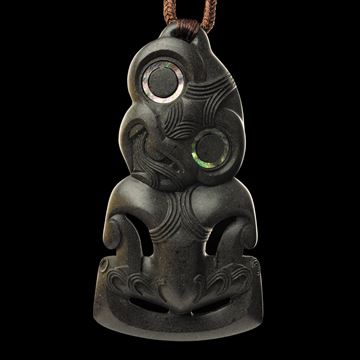
Hei Tiki - 6177KH
Hei tiki are the best known of all Māori adornments. Tiki are symbols of fertility that depict a new-born child. They are often family heirlooms bearing personal names and embodying their wearers lineage. As with most Māori personal adornments, hei tiki are often passed down generationally.
Material: Onewa (Graywacke)
Measurements: 183mm x 101mm x 25mm
$3,500.00