
Āhua Gallery
Select Subcategory
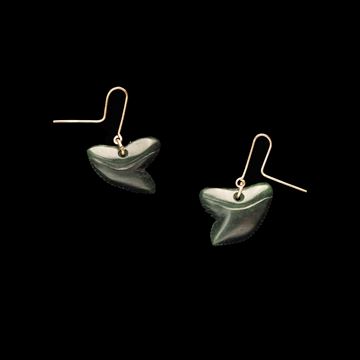
Tiger Shark Earrings - 4544IA
Shark teeth were highly sought after to wear as a symbol of prestige for personal adornment. They were reflective of the mana of the shark itself.
Material: Pounamu (Kawakawa)
Measurements: 12mm x 25mm x 6mm
$390.00
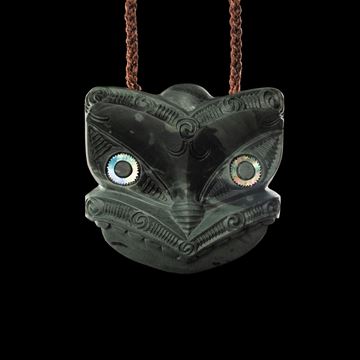
Wheku - 7863MA
In Māori carving there are three predominant designs for heads: the 'wheku' with its long eyes; the 'koruru' with its round eyes; and, the 'ruru', which also has round eyes but with a point at the top. The different designs were used by carvers to illustrate the character of the subject they were carving. The long eyes of the wheku were often used to depict a squint or frown.
Material: Ōnewa (Graywacke)
Measurements: 61mm x 62mm x 13mm
$1,425.00
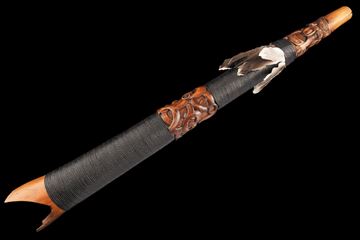
Pūkaea - 4798TJ
The pūkaea was the largest of the Māori trumpets, ranging in size from one metre (3.2ft) to over two meters (3.4ft) in length. They were made in two pieces and bound together with the roots of the kiekie (climber). Many pūkaea were carved and they often belonged to the chief of a tribe. They were typically used to call the tribe together.
Material: Matai
Measurements: 600mm x 70mm x 60mm
$5,900.00
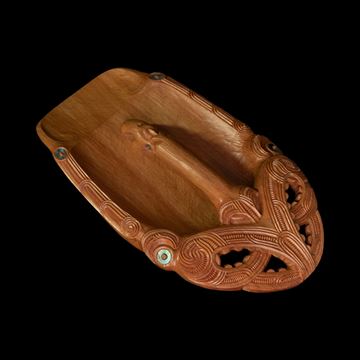
Tīheru (Bailer) - 4793GM
Often the bailer (tatā, tīheru or tā wai) was beautifully carved and some were given a name. In canoe traditions, tribal members still name the bailers used on the original voyaging canoes from Polynesia.
Material: Tōtara
Measurements: 180mm x 300mm x 50mm
$9,900.00
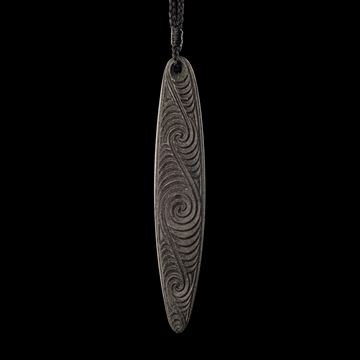
Kurupapa - 7603IA
Kurupapa are long slender pendants typically crafted from pounamu (NZ Jade) or bone. Customarily they were very popular personal adornments. Kurupapa are still commonly worn as pendants and earrings. As with most Māori personal adornments kurupapa are often passed down generationally.
Material: Onewa (Greywacke)
Measurements: 100mm x 19mm x 9mm
$600.00
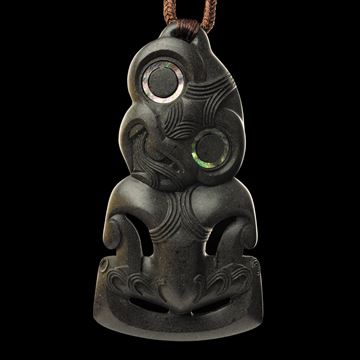
Hei Tiki - 6177KH
Hei tiki are the best known of all Māori adornments. Tiki are symbols of fertility that depict a new-born child. They are often family heirlooms bearing personal names and embodying their wearers lineage. As with most Māori personal adornments, hei tiki are often passed down generationally.
Material: Onewa (Graywacke)
Measurements: 183mm x 101mm x 25mm
$3,500.00
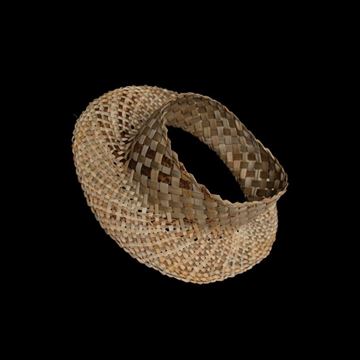
Pōtae - 5143ML
This Pōtae is a contemporary hat woven with traditional Māori weaving methods.
Material: Harakeke
Circumference: 21.5 inches
$250.00
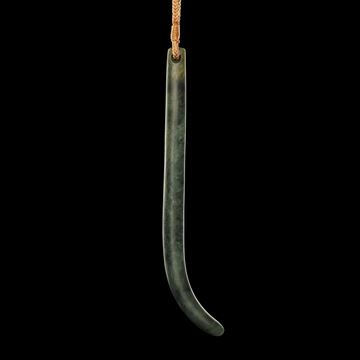
Kuru - 7202LT
Kurupapa are long slender pendants typically crafted from pounamu (NZ Jade) or bone. Customarily they were very popular personal adornments. Kurupapa are still commonly worn as pendants and earrings. As with most Māori personal adornments kurupapa are often passed down generationally.
Material: Pounamu (Kawakawa)
Measurements: 140mm x 11mm
$484.00
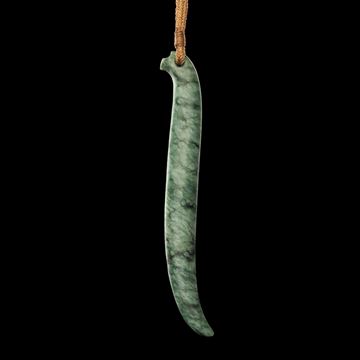
Manu - 7308SF
This manu (bird) form is a variation of the kapeu which are slender adornments with a slight bend at the bottom and were often worn as ear pendants. This kapeu has been fashioned from pounamu (New Zealand Jade). Kapeu were highly prized and a sign of high rank in Māori society. They are commonly also worn as neck pendants.
Material: Pounamu (Kawakawa)
Measurements: 120mm x 15mm x 8mm
$485.00
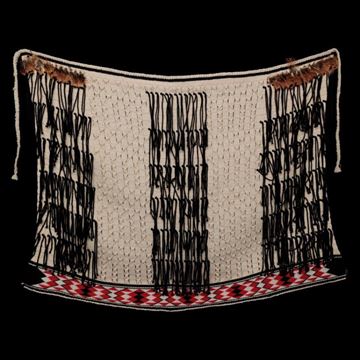
Kākahu (Contemporary) - 1731RA
The kākahu takes inspiration from traditional Māori cloaks. A kākahu is mantle of prestige and honour. This kākahu is made from mirowhiti miro (mop yarn) also incorporating materials that represent different types of kākahu including but not limited to kahu huruhuru (feathers) and tāniko.
Material: Cotton, Mop Yarn, Wool, Feathers
Measurements: 1016mm x 762mm
$4,400.00
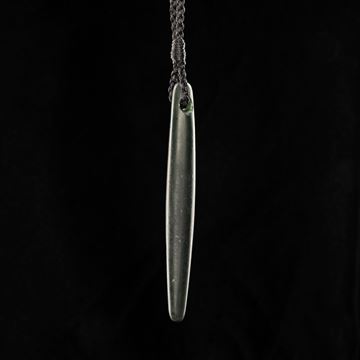
Kuru - 7153LA
Kurupapa are long slender pendants typically crafted from pounamu (NZ Jade) or bone. Customarily they were very popular personal adornments. Kurupapa are still commonly worn as pendants and earrings. As with most Māori personal adornments kurupapa are often passed down generationally.
Material: Pounamu (Kawakawa)
Measurements: 77mm x 10mm
$375.00
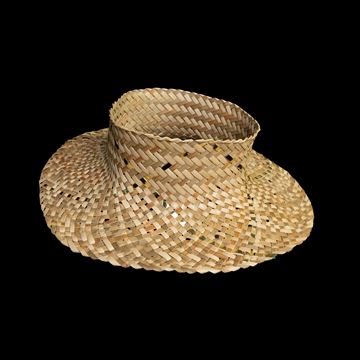
Pōtae - 6779AY
This Pōtae is a contemporary hat woven with traditional Māori weaving methods.
Material: Harakeke & Metallic Foil
Circumference: 21 inches (53cm)
$390.00