Āhua Gallery
Select Subcategory
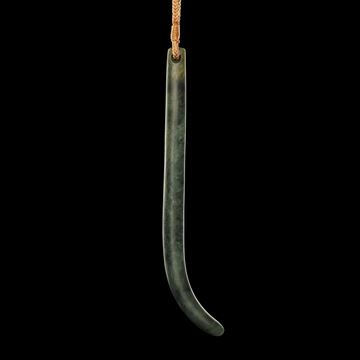
Kuru - 7202LT
Kurupapa are long slender pendants typically crafted from pounamu (NZ Jade) or bone. Customarily they were very popular personal adornments. Kurupapa are still commonly worn as pendants and earrings. As with most Māori personal adornments kurupapa are often passed down generationally.
Material: Pounamu (Kawakawa)
Measurements: 140mm x 11mm
$484.00
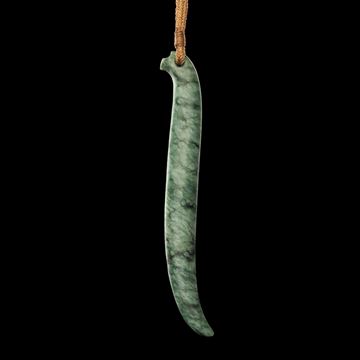
Manu - 7308SF
This manu (bird) form is a variation of the kapeu which are slender adornments with a slight bend at the bottom and were often worn as ear pendants. This kapeu has been fashioned from pounamu (New Zealand Jade). Kapeu were highly prized and a sign of high rank in Māori society. They are commonly also worn as neck pendants.
Material: Pounamu (Kawakawa)
Measurements: 120mm x 15mm x 8mm
$485.00
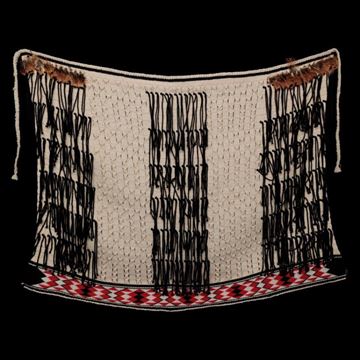
Kākahu (Contemporary) - 1731RA
The kākahu takes inspiration from traditional Māori cloaks. A kākahu is mantle of prestige and honour. This kākahu is made from mirowhiti miro (mop yarn) also incorporating materials that represent different types of kākahu including but not limited to kahu huruhuru (feathers) and tāniko.
Material: Cotton, Mop Yarn, Wool, Feathers
Measurements: 1016mm x 762mm
$4,400.00
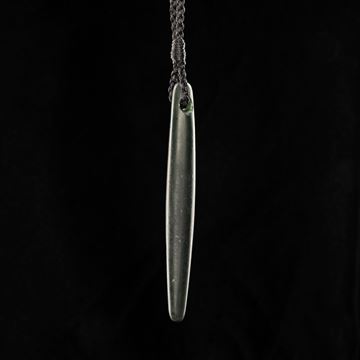
Kuru - 7153LA
Kurupapa are long slender pendants typically crafted from pounamu (NZ Jade) or bone. Customarily they were very popular personal adornments. Kurupapa are still commonly worn as pendants and earrings. As with most Māori personal adornments kurupapa are often passed down generationally.
Material: Pounamu (Kawakawa)
Measurements: 77mm x 10mm
$375.00
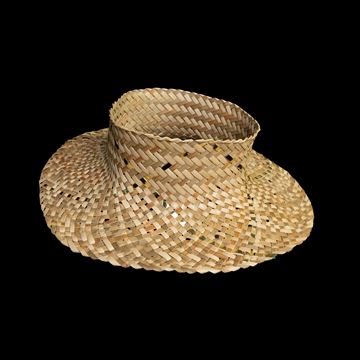
Pōtae - 6779AY
This Pōtae is a contemporary hat woven with traditional Māori weaving methods.
Material: Harakeke & Metallic Foil
Circumference: 21 inches (53cm)
$390.00
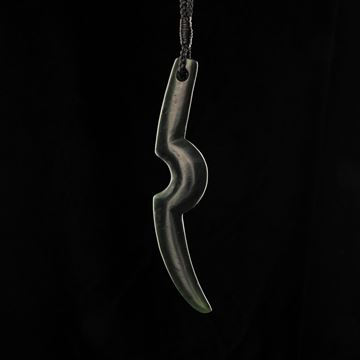
Whakakaipiko - 7159LA
Whakakaipiko (Aupiko) forms were given as a symbol of endearment. Whakakaipiko are long and slender personal adornments characterised by a ‘piko’ or kink in the body of the pendant. Customarily they were used as a pin for fastening cloaks and may be made from bone, stone, wood or shell. Whakakaipiko are commonly worn as pendants.
Material: Pounamu (Kawakawa)
Measurements: 92mm x 13mm
$471.00
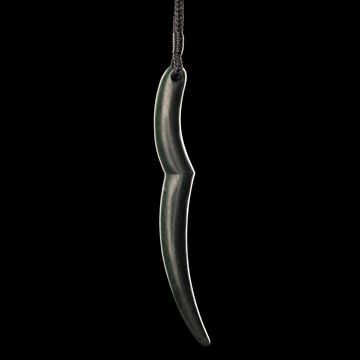
Whakakaipiko - 7210LT
Whakakaipiko (Aupiko) forms were given as a symbol of endearment. Whakakaipiko are long and slender personal adornments characterised by a ‘piko’ or kink in the body of the pendant. Customarily they were used as a pin for fastening cloaks and may be made from bone, stone, wood or shell. Whakakaipiko are commonly worn as pendants.
Material: Pounamu (Kawakawa)
Measurements: 125mm x 13mm
$568.00
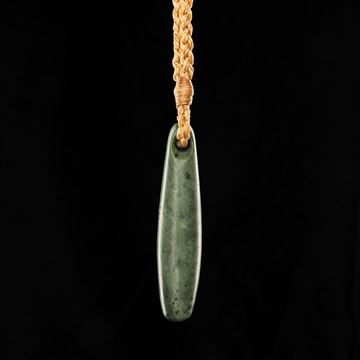
Kuru - 6332HW
This manu (bird) form is a variation of the kapeu which are slender adornments with a slight bend at the bottom and were often worn as ear pendants. This kapeu has been fashioned from pounamu (New Zealand Jade). Kapeu were highly prized and a sign of high rank in Māori society. They are commonly also worn as neck pendants.
Material: Pounamu (Kawakawa)
Measurements: 65mm X 15mm
$415.00
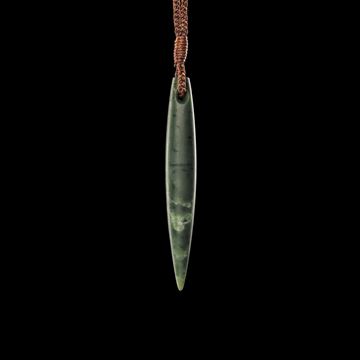
Kuru - 7205LT
Kurupapa are long slender pendants typically crafted from pounamu (NZ Jade) or bone. Customarily they were very popular personal adornments. Kurupapa are still commonly worn as pendants and earrings. As with most Māori personal adornments kurupapa are often passed down generationally.
Material: Pounamu (Kawakawa)
Measurements: 80mm x 11mm
$395.00
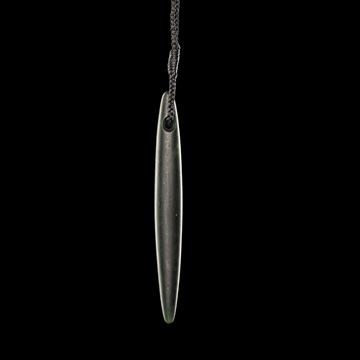
Kuru - 7206LT
Kurupapa are long slender pendants typically crafted from pounamu (NZ Jade) or bone. Customarily they were very popular personal adornments. Kurupapa are still commonly worn as pendants and earrings. As with most Māori personal adornments kurupapa are often passed down generationally.
Material: Pounamu (Kawakawa)
Measurements: 90mm x 11mm
$412.00
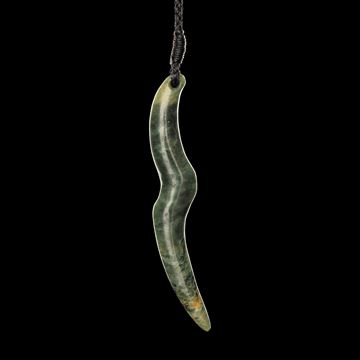
Whakakaipiko - 8577HW
Whakakaipiko forms were given as a symbol of endearment. Whakakaipiko are long and slender personal adornments characterised by a ‘piko’ or kink in the body of the pendant. Customarily they were used as a pin for fastening cloaks and may be made from bone, stone, wood or shell. Whakakaipiko are commonly worn as pendants.
Material: Pounamu (Matie)
Measurements: 95mm x 15mm
$460.00
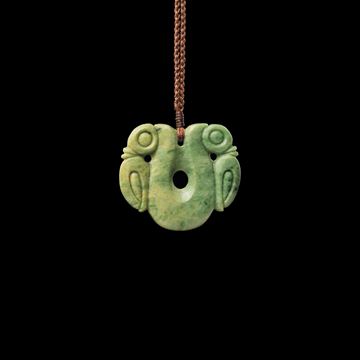
Pekapeka - 7633IA
The Pekapeka (native NZ bat) represents the interwoven nature of the spirit world and the world of the living – the seen and the unseen. The bat was interpreted by Māori as a creature who symbolically acted as an interface between the two worlds and whose physiology (which does not possess the gift of sight) appeared to be guided by the ethereal and the metaphysical.
Material: Pounamu (Raukaraka)
Measurements: 50mm x 42mm x 5mm
$434.00