
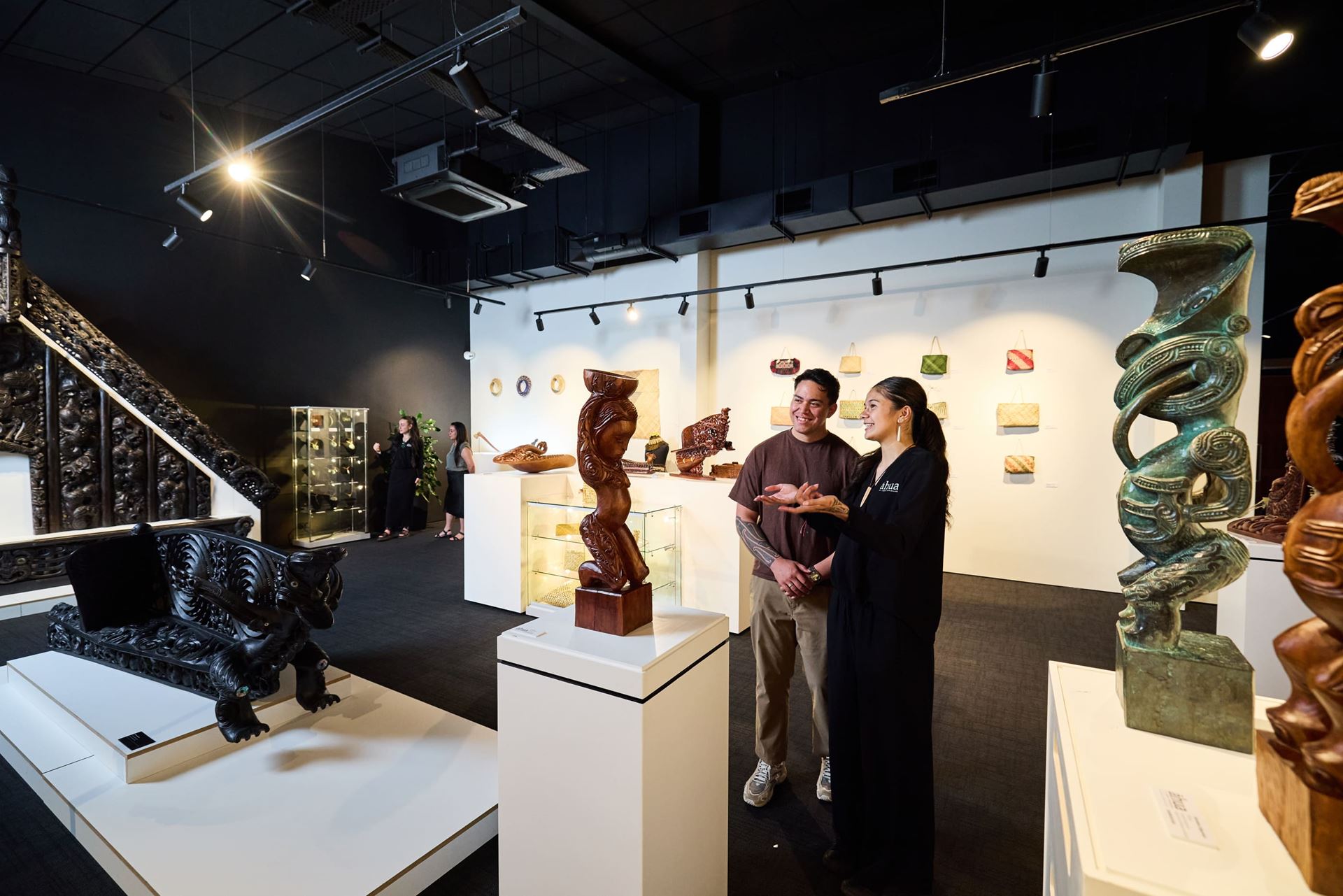
Āhua Gallery
Select Subcategory
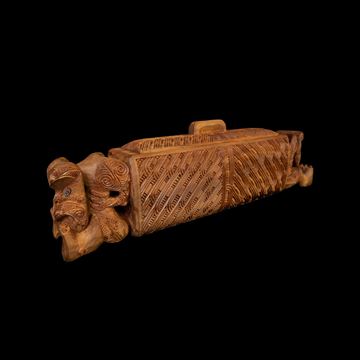
Waka Pungarehu - 2579SL
The Waka Pungarehu (Ash Urn) has two carved tekoteko (statues) positioned at the ends of the waka pungarehu which are carved in the traditional style of whakapakoko, resembling preserved corpses. The surface is intricately adorned with the raperape design, symbolizing the continuous cycle of life and the evolution of death. The pakati and haehae techniques are skillfully carved to enhance the entire waka pungarehu, with the distinctive pakati design known as niho kuri (dog’s teeth) adding a unique touch. The pakati designs feature iroiro (maggots) motifs, symbolizing the natural process of
decomposition when a human body returns to the earth.
Material: Tōtara
Measurements: 450mm x 110mm x 90mm
$10,500.00
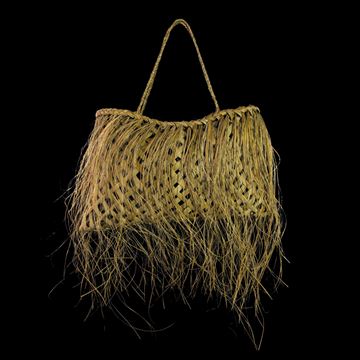
Kete Kai - 5818RW
Kete Kai is a food gathering basket that is typical used to house food from the ocean or the land. Kete kai was used for every type of food that was gathered. You were not allowed to mix land food kete with the ocean food kete as it was tapu. The pattern on this kete kai is taki tahi and the holes are called puareare.
Material: Harakeke
Measurements: 360mm x 200mm
$490.00
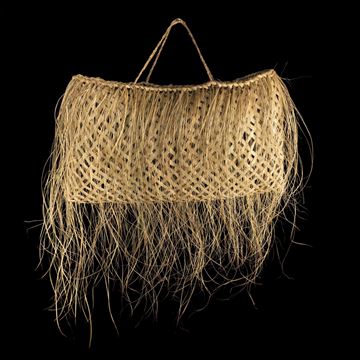
Kete Kai - 5830RW
Kete Kai is a food gathering basket that is typical used to house food from the ocean or the land. Kete kai was used for every type of food that was gathered. You were not allowed to mix land food kete with the ocean food kete as it was tapu. The pattern on this kete kai is taki tahi and the holes are called puareare.
Material: Harakeke
Measurements: 340mm x 490mm
$620.00
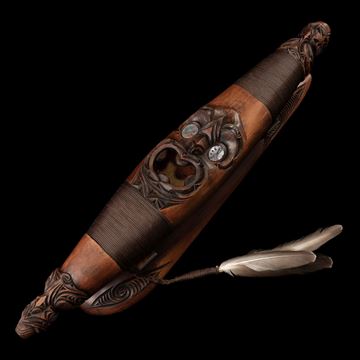
Pūtōrino (on Stand) - 4799KA
In Māori whakapapa (genealogy), all Māori flutes come to us from Hine Raukatauri, the daughter of Tānemahuta, the atua (spiritual entity) of the forest and birds. Hine Raukatauri is best known as the atua of flute music. She loved her flute so much that she chose to live inside it. She is now personified as the case moth that hangs from branches of trees in a long slender cocoon. This case moth cocoon is where the pūtōrino gets its shape from.
Material: Mataī (NZ Native)
Measurements: 400mm x 70mm x 50mm
$7,990.00
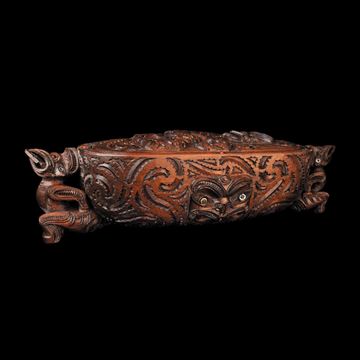
Wakahuia - 4783KA
Customarily wakahuia were vessels used for housing valuable feathers of the revered native huia bird. Following the extinction of the huia, wakahuia are now more commonly used to retain the treasured heirlooms of its owner such as hei tiki and other adornments. Wakahuia were originally designed to be suspended from the rafters of a dwelling and therefore had as much carving on the lower surface as the top. Wakahuia were highly prized and carefully treasured as they were passed between generations as heirlooms. They were often gifted between whānau, hapū and individuals to acknowledge relationships, friendships, and other significant social events.
Material: Tōtara
Measurements: 345mm x 110mm x 90mm
$9,500.00
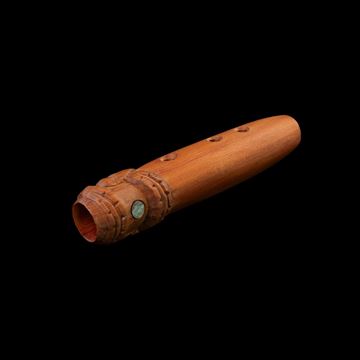
Kōauau 4439HY
Kōauau are part of the flute family and come to us from the atua (spiritual entity) of flute music Hine Raukatauri. Kōauau is also the name for a species of hollow kelp, which can also be used to make instruments. Kōauau are made from a variety of different materials including wood, bone or sometimes stone. Most kōauau have three wenewene (finger holes) although there are several older examples that have four or more. The kaiwhakangāwari is the wenewene closest to the mouth, the kaiwhakahī is the middle wenewene and the kaiwhakakaha is the wenewene closest to the distal end.
There are many uses for kōauau. In Māori tradition, birds are sometimes seen as important messengers from the spirit world. Kōauau have a reputation of attracting the native birds of Aotearoa. The birds will often interact with the beautiful melody from the kōauau, giving us a glimpse of the spiritual aspects of the kōauau song.
Material: Mataī (NZ Native)
Measurements: 123mm x 26mm x 26mm
$850.00
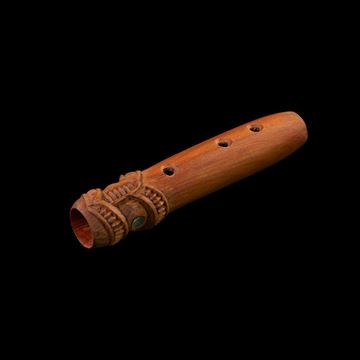
Kōauau 5859HY
Kōauau are part of the flute family and come to us from the atua (spiritual entity) of flute music Hine Raukatauri. Kōauau is also the name for a species of hollow kelp, which can also be used to make instruments. Kōauau are made from a variety of different materials including wood, bone or sometimes stone. Most Kōauau have 3 wenewene (finger holes) although there are several older examples that have 4 or more. The kaiwhakangāwari is the wenewene closest to the mouth, the kaiwhakahī is the middle wenewene and the kaiwhakakaha is the wenewene closest to the distal end.
There are many uses for kōauau. In Māori tradition, birds are sometimes seen as important messengers from the spirit world. Kōauau have a reputation of attracting the native birds of Aotearoa. The birds will often interact with the beautiful melody from the kōauau, giving us a glimpse of the spiritual aspects of the kōauau song.
Material: Mataī (NZ Native)
Measurements: 123mm x 26mm x 26mm
$850.00
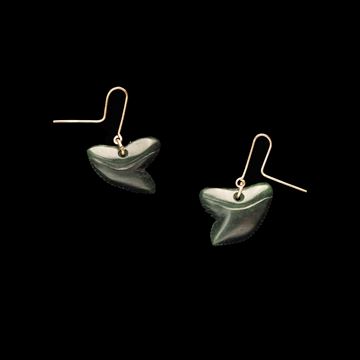
Tiger Shark Earrings - 4544IA
Shark teeth were highly sought after to wear as a symbol of prestige for personal adornment. They were reflective of the mana of the shark itself.
Material: Pounamu (Kawakawa)
Measurements: 12mm x 25mm x 6mm
$390.00
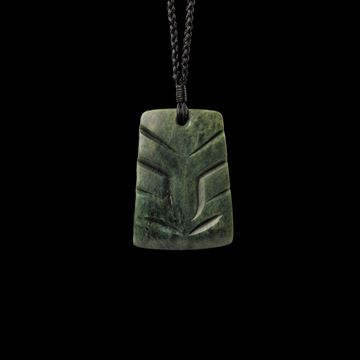
Toki - 7609IA
The toki pendent is based on the form of the carving chisel used in whakairo (Māori carving).
Material: Pounamu (Kawakawa)
Measurements: 52mm x 40mm x 7mm
$467.00
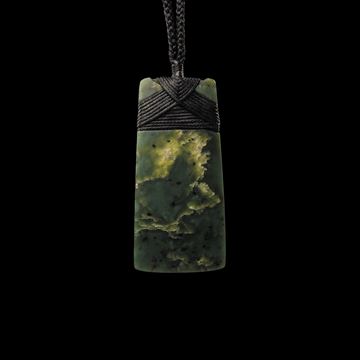
Toki - 7648IA
The toki pendent is based on the form of the carving chisel used in whakairo (Māori carving).
Material: Pounamu (Kawakawa)
Measurements: 78mm x 35mm x 8mm
$650.00
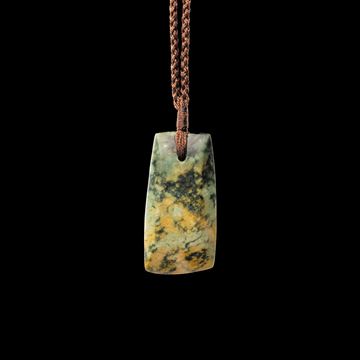
Toki - 7717HW
The toki pendent is based on the form of the carving chisel used in whakairo (Māori carving).
Material: Kawkawa (Pounamu)
Measurements: 62mm x 31mm
$385.00
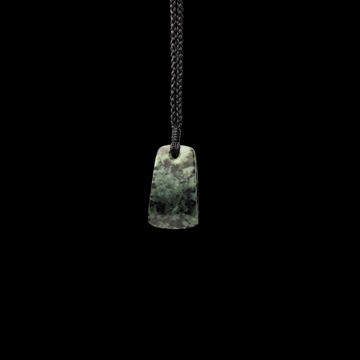
Toki -7601IA
The toki pendent is based on the form of the carving chisel used in whakairo (Māori carving).
Material: Pounamu (Kotingotingo)
Measurements: 34mm x 19mm x 4mm
$250.00