
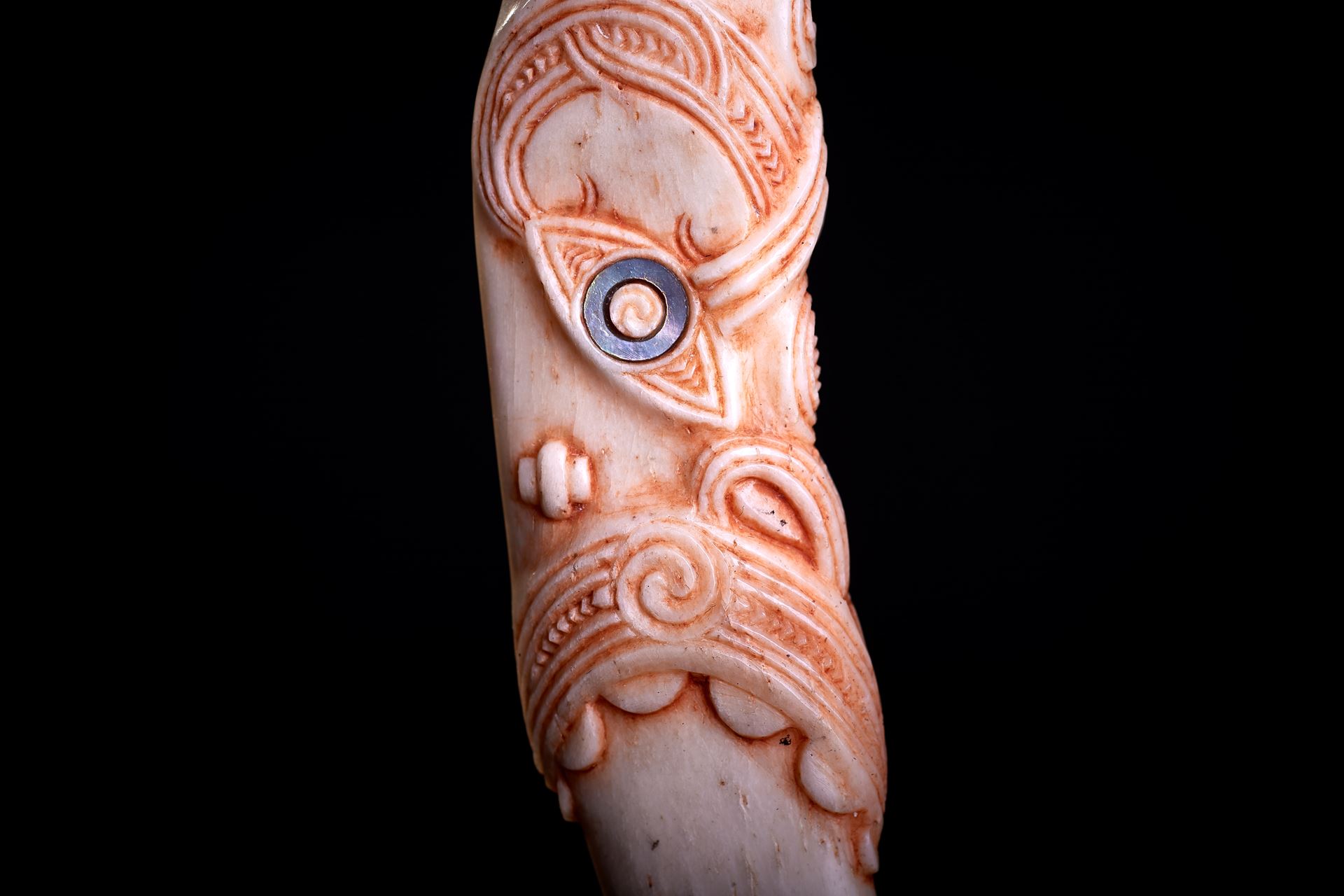
Wheua - Bone
At Te Takapū, students learn the revered tradition of carving pounamu (Nephrite-Jade/Greenstone), bone and stone. This tohu (qualification) is for two years and is approximately 40 hours per week, 47 weeks of the year.
Would you like something custom made especially for you? Commission a piece here
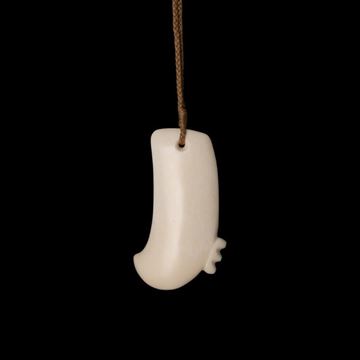
Rei Niho - 3789IA
The mark of a high Chief was one who wore the hei niho (whale tooth pendant), as the teeth of the sperm whale were highly prized because of their rarity. Usually these pendants had simply etched out eyes to form a head at one end. With actual whale teeth being such a rarity, it became common to fashion the tooth form from other materials.
Material: Koiwi (Beef Bone)
Measurements: 67mm x 40mm
$250.00
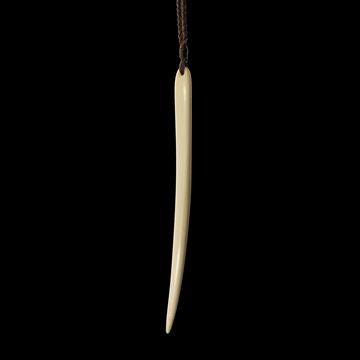
Autui - 6142HF
Autui were customarily used as a pin for fastening cloaks and may be made from bone, stone, wood or shell. They may also have been worn through the ear as an earring or around the neck as a pendant. Autui are still commonly worn as pendants and earrings and as with most Māori personal adornments, are often passed down generationally.
Material: Koiwi (Beef Bone)
Measurements: 125mm x 10mm x 4mm
$320.00
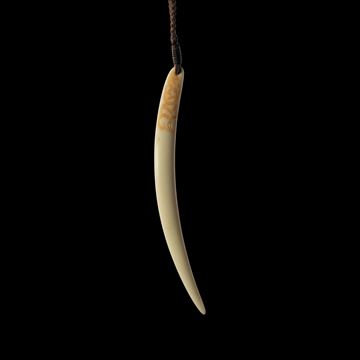
Autui - 6144HF
Autui were customarily used as a pin for fastening cloaks and may be made from bone, stone, wood or shell. They may also have been worn through the ear as an earring or around the neck as a pendant. Autui are still commonly worn as pendants and earrings and as with most Māori personal adornments, are often passed down generationally.
Material: Koiwi (Beef Bone)
Measurements: 106mm x 9mm
$390.00
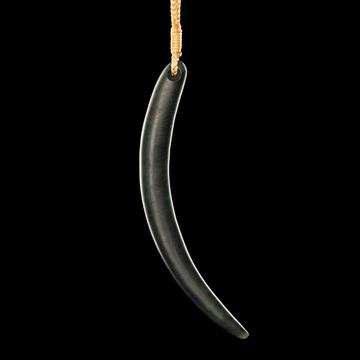
Autui - 7209LT
Autui were customarily used as a pin for fastening cloaks and may be made from bone, stone, wood or shell. They may also have been worn through the ear as an earring or around the neck as a pendant. Autui are still commonly worn as pendants and earrings and as with most Māori personal adornments, are often passed down generationally.
Material: Kawakwa (Pounamu)
Measurements: 106mm x 10mm
$435.00
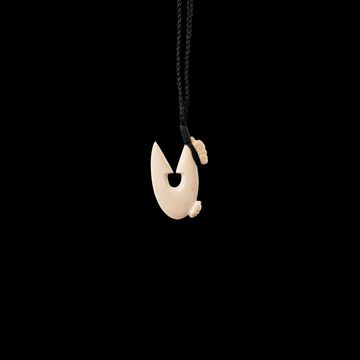
Hei Matau - 7224LT
Coastal and river-based Māori tribes traditionally used a variety of fishhooks and lures. Hooks and lures varied in shape, material and design. Today hei matau (fishhooks) have become symbolic of traditional Māori technology and continue to symbolize a relationship to Tangaroa, God of the sea.
Material: Wheua (Cattlebone)
Measurements: 28mm x 40mm
$339.00