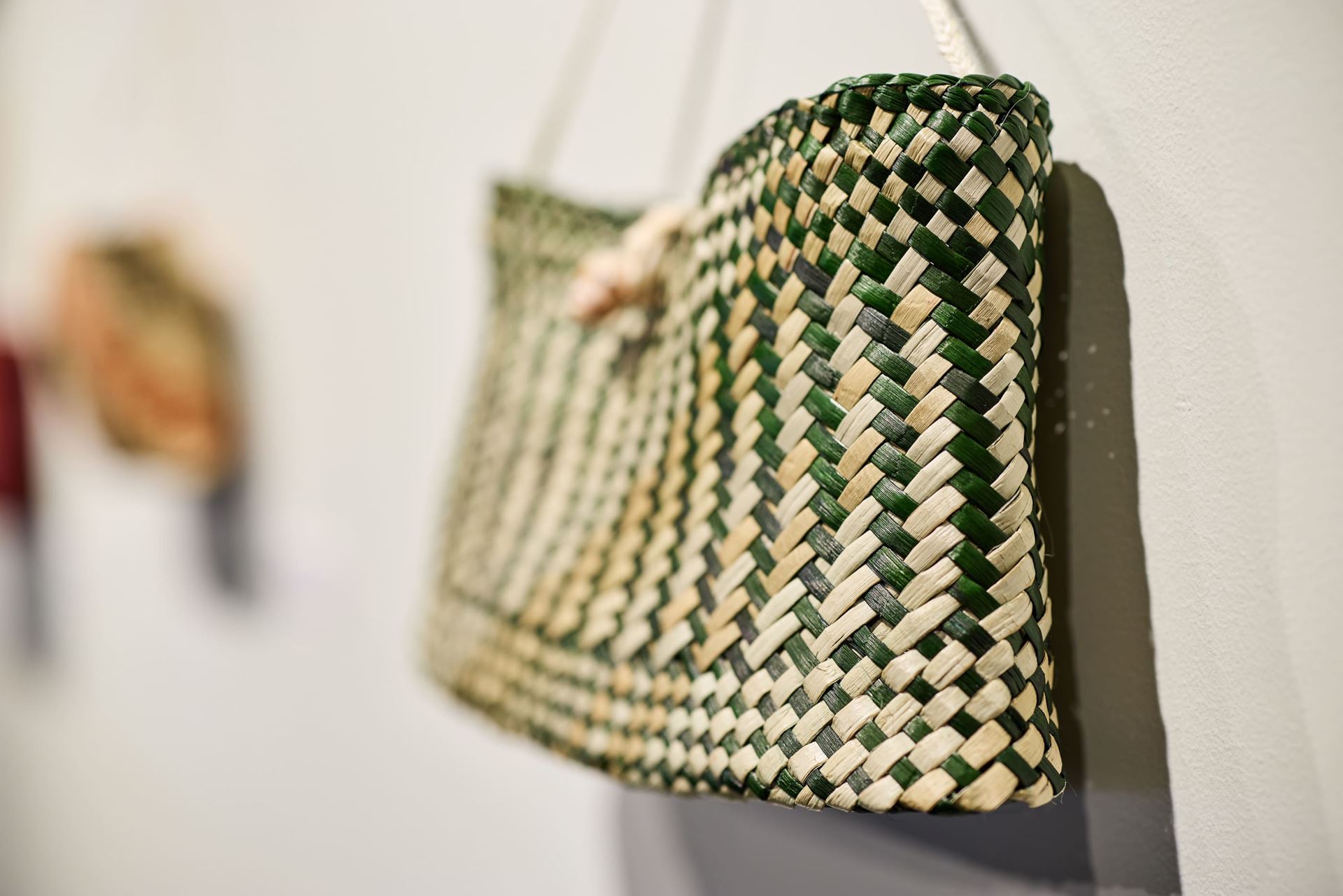
Te Rito, named after the baby shoot at the heart of the flax bush, was built in 1994. At this school, male and female students have the honour of learning traditional Māori weaving techniques, as taught by experienced tutors. This tohu is for 2 years and is 40 hours per week, 47 weeks of the year.
Would you like something custom made especially for you? Commission a piece here
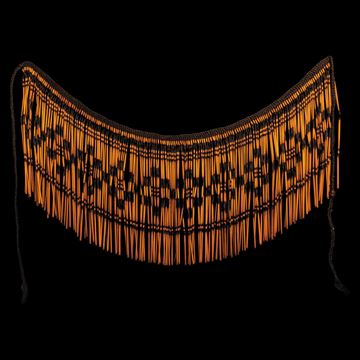
Piupiu (Tāne) - 5832RW
The word 'piupiu' means 'to swing’ and is also the name for a skirt with free-hanging strands. Piupiu can be worn either around the waist or across one shoulder. They were made in many types of material and styles.
Material: Harakeke & Muka
Measurements: 1100mm x 420mm or 43 inches
$1,890.00
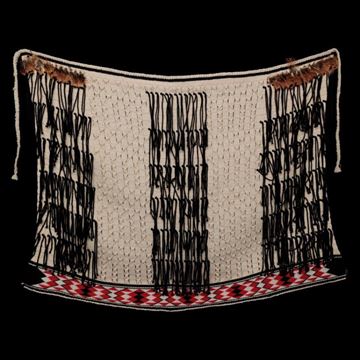
Kākahu (Contemporary) - 1731RA
The kākahu takes inspiration from traditional Māori cloaks. A kākahu is mantle of prestige and honour. This kākahu is made from mirowhiti miro (mop yarn) also incorporating materials that represent different types of kākahu including but not limited to kahu huruhuru (feathers) and tāniko.
Material: Cotton, Mop Yarn, Wool, Feathers
Measurements: 1016mm x 762mm
$4,400.00
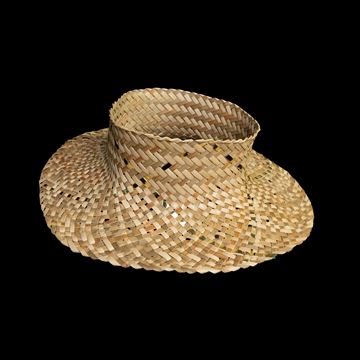
Pōtae - 6779AY
This Pōtae is a contemporary hat woven with traditional Māori weaving methods.
Material: Harakeke & Metallic Foil
Circumference: 21 inches (53cm)
$390.00