
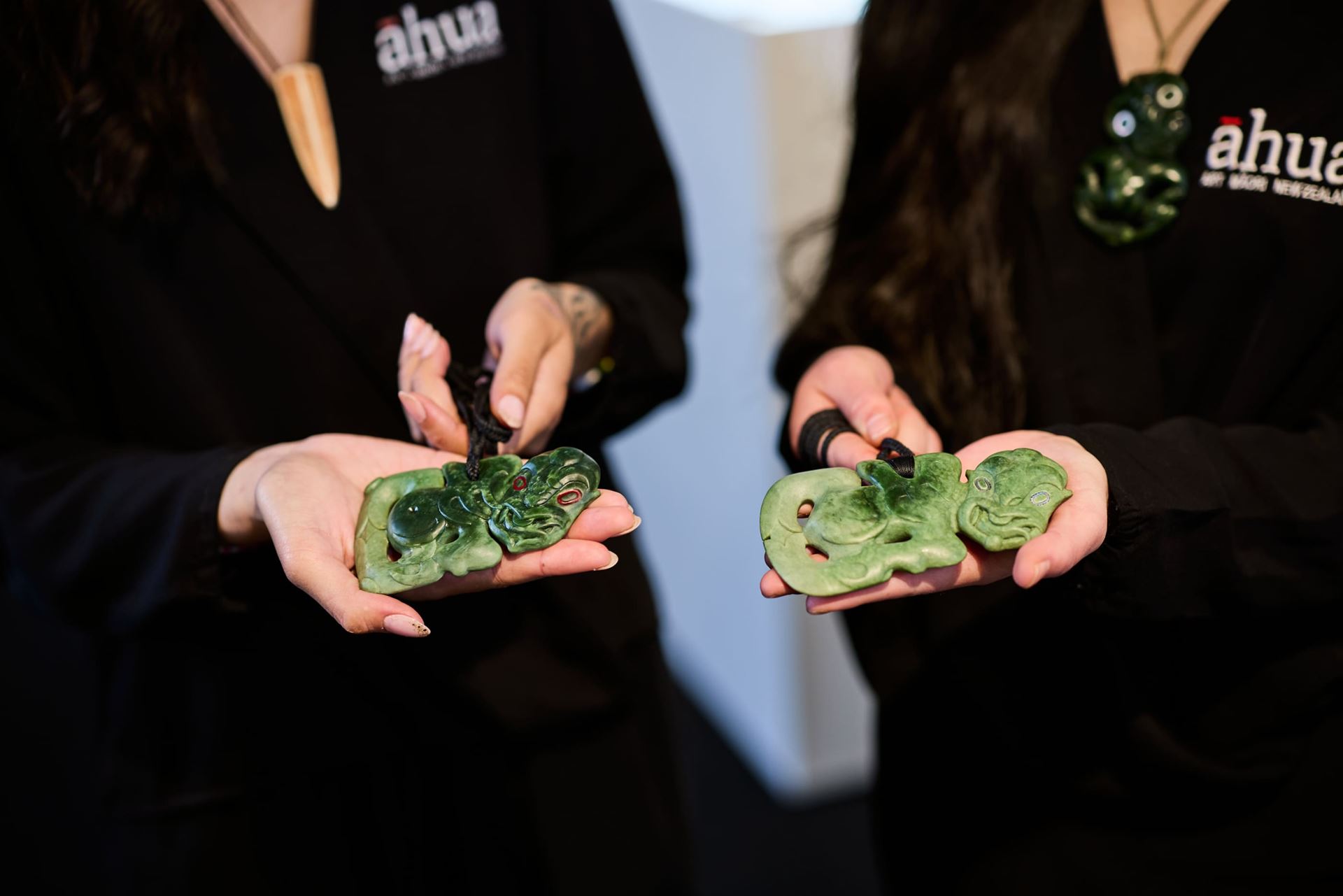
Te Takapū - National Stone & Bone Carving School
Select Subcategory
At Te Takapū, students learn the revered tradition of carving pounamu (Nephrite-Jade/Greenstone), bone and stone.
The school opened on 5 October 2009, expanding on NZMACI’s commitment to maintaining, developing and promoting the arts, crafts and culture of iwi Māori (Māori tribes) as mandated by the New Zealand Maori Arts and Crafts Institute Act (1963) (History).
The school was first led by Lewis Gardiner who is a well-regarded pounamu artist of his generation.
Stacy Gordine, a renowned artist from the East Coast of New Zealand – and uri of Hone Te Kauru and Pine Taiapa – now leads the programme and is shaping the direction of the wānanga into the future.
Would you like something custom made especially for you? Commission a piece here
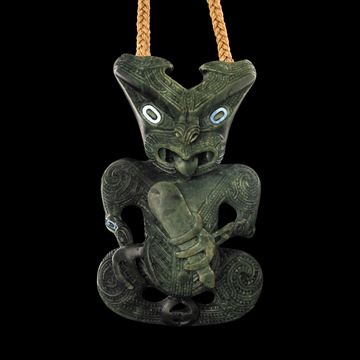
Hei Poupou - 6739PD
The interior walls of the whare whakairo (carved meeting house) are adorned with carvings called poupou. Each poupou in a meeting house connects to a common ancestor, after whom the house was named. Spaced evenly along the inside walls, each poupou supported a rafter panel which extended from the main central ridge, reinforcing the importance of whakapapa (genealogy) to the living generations.
Material: Pounamu (Kawakawa)
Measurements: 112mm x 68mm
$9,244.00
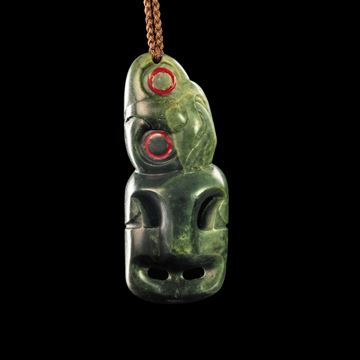
Hei Tiki - 6178KH
Hei tiki are the best known of all Māori adornments. Tiki are symbols of fertility that depict a new-born child. They are often family heirlooms bearing personal names and embodying their wearers lineage. As with most Māori personal adornments, hei tiki are often passed down generationally.
Material: Pounamu (Kawakawa)
Measurements: 95mm x 40mm x 16mm
$2,300.00
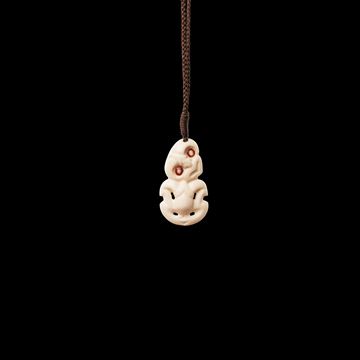
Hei Tiki - 7737HW
Hei tiki are the best known of all Māori adornments. Tiki are symbols of fertility that depict a new-born child. They are often family heirlooms bearing personal names and embodying their wearers lineage. As with most Māori personal adornments, hei tiki are often passed down generationally.
Material: Wheua (Cattle Bone)
Measurements: 41mm x 23mm
$580.00
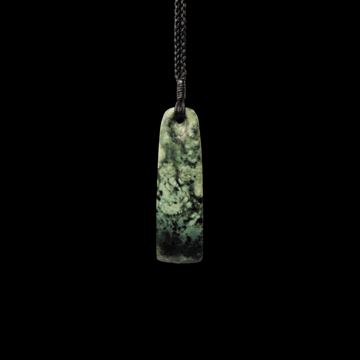
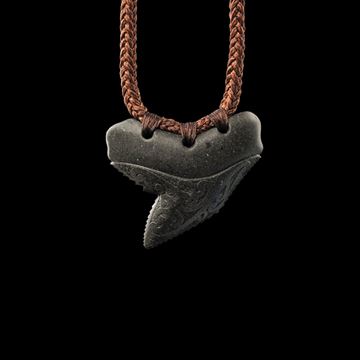
Niho Mango - 6742PD
Shark teeth were highly sought after to wear as a symbol of prestige for personal adornment. They were reflective of the mana of the shark itself. .
Material: Ōnewa (NZ Greywacke)
Measurements: 47mm X 55mm
$563.00
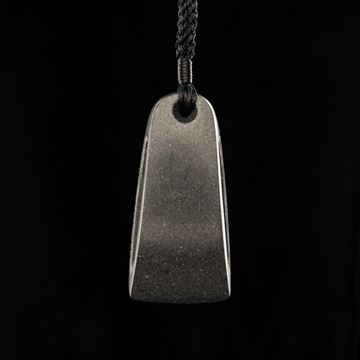
Toki - 6572IA
The toki pendent is based on the form of the carving chisel used in whakairo (Māori carving).
Material: Ōnewa (Greywacke)
Measurements:62mm x 28mm x 12mm
$445.00
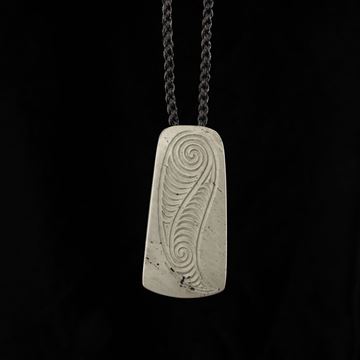
Toki - 6573IA
The toki pendent is based on the form of the carving chisel used in whakairo (Māori carving).
Material: Pakohe (Argillite)
Measurements: 50mm x 21mm x 11mm
$331.00
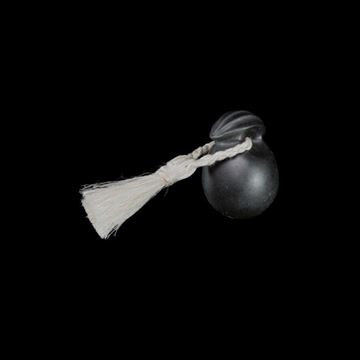
Māhē - 4501HW
Māhē are sinker stones used to weigh down fishing nets.
Material: Otaua (Greywacke)
Measurements: 50mm x 37mm x 35mm
$490.00
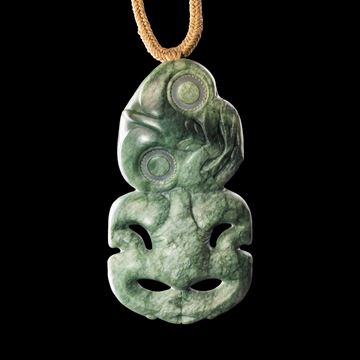
Hei Tiki - 5877SG
Hei tiki are the best known of all Māori adornments. Tiki are symbols of fertility that depict a new-born child. They are often family heirlooms bearing personal names and embodying their wearers lineage. As with most Māori personal adornments, hei tiki are often passed down generationally.
Material: Pounamu (Tokatea)
Measurements: 80mm x 48mm x 8mm
$3,500.00
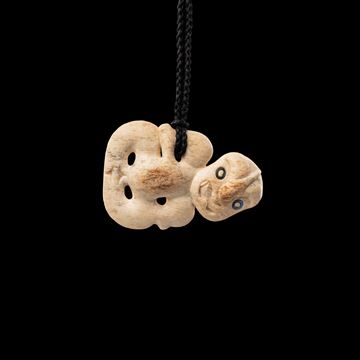
Hei Tiki - 6525HF
Hei tiki are the best known of all Māori adornments. Tiki are symbols of fertility that depict a new-born child. They are often family heirlooms bearing personal names and embodying their wearers lineage. As with most Māori personal adornments, hei tiki are often passed down generationally.
Material: Parāoa (Whale Bone)
Measurements: 73mm x 43mm
$1,205.00
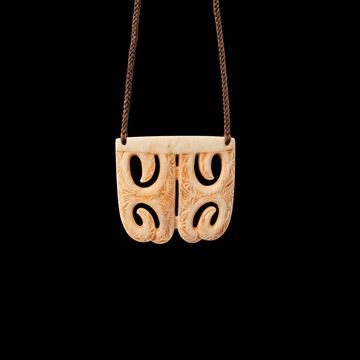
Moko Kauae - 6512HF
Traditionally women who acquired moko kauae (female chin tattoos) received them based on their mana, established through their whakapapa. They were nominated by the hapū to ensure there was a woman of mana to represent them on the marae.
Material: Parāoa (Whale Bone)
Measurements: 49mm x57mm
$1,546.00
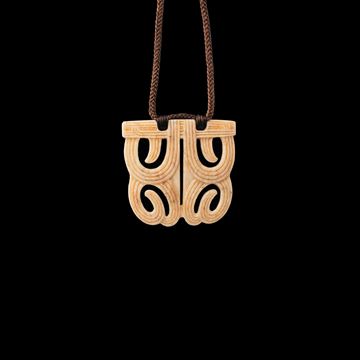
Moko Kauae - 6528HF
Traditionally women who acquired moko kauae (female chin tattoos) received them based on their mana, established through their whakapapa. They were nominated by the hapū to ensure there was a woman of mana to represent them on the marae.
Material: Parāoa (Whale Bone)
Measurements: 50m x 55mm
$1,604.00
Recently viewed products
