
Āhua Gallery
Select Subcategory
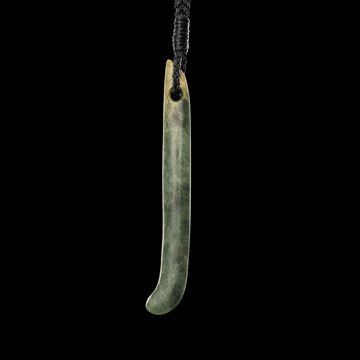
Kapeu - 7156LA
Kapeu are slender adornments with a slight bend at the bottom and were often worn as ear pendants. Kapeu were highly prized and a sign of high rank in Māori society. They are commonly also worn as neck pendants. As with most Māori personal adornments kapeu are often passed down generationally
Material: Pounamu (Matie)
Measurements: 71mm x 9mm
$432.00
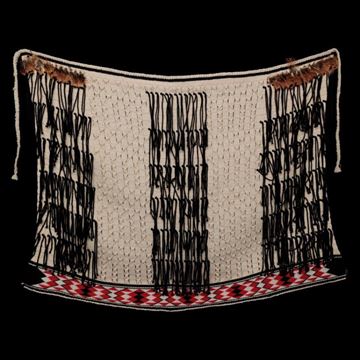
Kākahu (Contemporary) - 1731RA
The kākahu takes inspiration from traditional Māori cloaks. A kākahu is mantle of prestige and honour. This kākahu is made from mirowhiti miro (mop yarn) also incorporating materials that represent different types of kākahu including but not limited to kahu huruhuru (feathers) and tāniko.
Material: Cotton, Mop Yarn, Wool, Feathers
Measurements: 1016mm x 762mm
$4,400.00

Kākahu (Contemporary) - 1630WK
The kākahu takes inspiration from traditional Māori cloaks. A kākahu is mantle of prestige and honour. This kākahu is made from mirowhiti miro (mop yarn) also incorporating materials that represent different types of kākahu including but not limited to kahu huruhuru (feathers) and tāniko.
Material: Cotton, Mop Yarn, Wool, Feathers
Measurements: 875mm x 775mm
$3,900.00
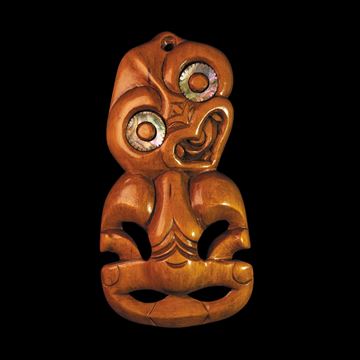
Hei Tiki - 6639CF
Hei tiki are the best known of all Māori adornments. Tiki are symbols of fertility that depict a new-born child. They are often family heirlooms bearing personal names and embodying their wearers lineage. As with most Māori personal adornments, hei tiki are often passed down generationally.
Material: Tōtara (Red Pine)
Measurements: 225mm x 115mm x 25mm
$3,900.00
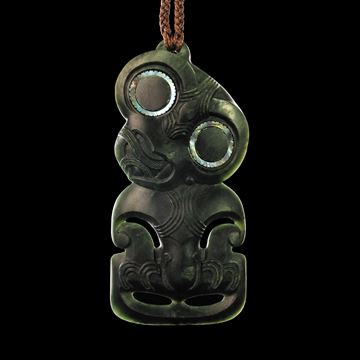
Hei Tiki - 6184KH
Hei tiki are the best known of all Māori adornments. Tiki are symbols of fertility that depict a new-born child. They are often family heirlooms bearing personal names and embodying their wearers lineage. As with most Māori personal adornments, hei tiki are often passed down generationally.
Material: Pounamu (Kawakawa)
Measurements: 140mm x 67mm x 15mm
$3,200.00
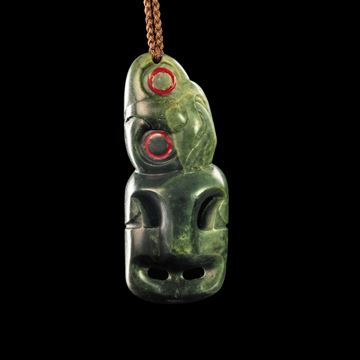
Hei Tiki - 6178KH
Hei tiki are the best known of all Māori adornments. Tiki are symbols of fertility that depict a new-born child. They are often family heirlooms bearing personal names and embodying their wearers lineage. As with most Māori personal adornments, hei tiki are often passed down generationally.
Material: Pounamu (Kawakawa)
Measurements: 95mm x 40mm x 16mm
$2,300.00
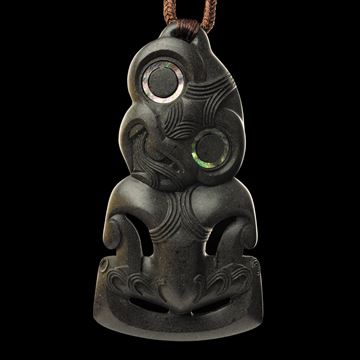
Hei Tiki - 6177KH
Hei tiki are the best known of all Māori adornments. Tiki are symbols of fertility that depict a new-born child. They are often family heirlooms bearing personal names and embodying their wearers lineage. As with most Māori personal adornments, hei tiki are often passed down generationally.
Material: Onewa (Graywacke)
Measurements: 183mm x 101mm x 25mm
$3,500.00
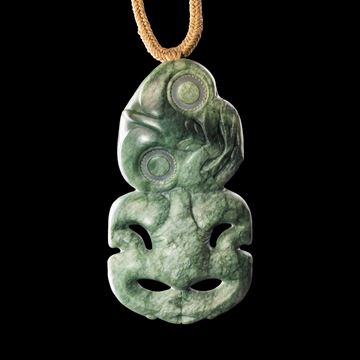
Hei Tiki - 5877SG
Hei tiki are the best known of all Māori adornments. Tiki are symbols of fertility that depict a new-born child. They are often family heirlooms bearing personal names and embodying their wearers lineage. As with most Māori personal adornments, hei tiki are often passed down generationally.
Material: Pounamu (Tokatea)
Measurements: 80mm x 48mm x 8mm
$3,500.00
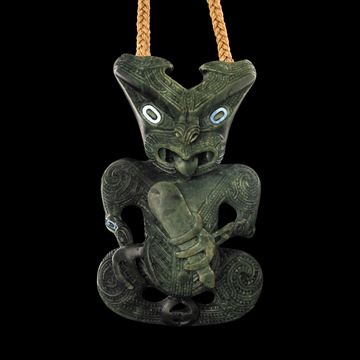
Hei Poupou - 6739PD
The interior walls of the whare whakairo (carved meeting house) are adorned with carvings called poupou. Each poupou in a meeting house connects to a common ancestor, after whom the house was named. Spaced evenly along the inside walls, each poupou supported a rafter panel which extended from the main central ridge, reinforcing the importance of whakapapa (genealogy) to the living generations.
Material: Pounamu (Kawakawa)
Measurements: 112mm x 68mm
$9,244.00
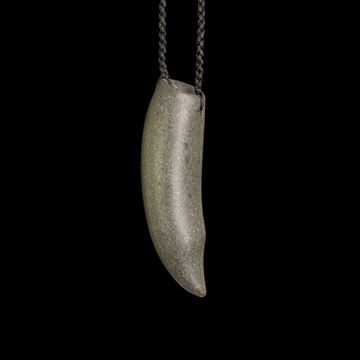
Hei Niho - 5397KC
Shark teeth were highly sought after to wear as a symbol of prestige for personal adornment. They were reflective of the mana of the shark itself.
Material: Onewa (NZ Greywacke)
Measurements: 73mm x 21mm
$310.00
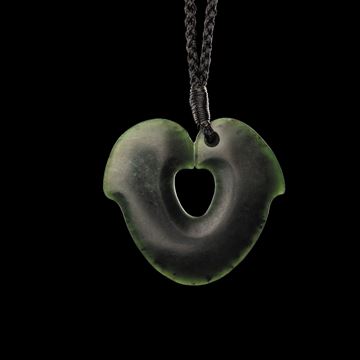
Hei Matau - 7702HW
Coastal and river-based Māori tribes traditionally used a variety of fishhooks and lures. Hooks and lures varied in shape, material and design. Today hei matau (fishhooks) have become symbolic of traditional Māori technology and continue to symbolize a relationship to Tangaroa, God of the sea.
Material: Pounamu (Kawakawa)
Measurements: 55mm x 60mm
$580.00