
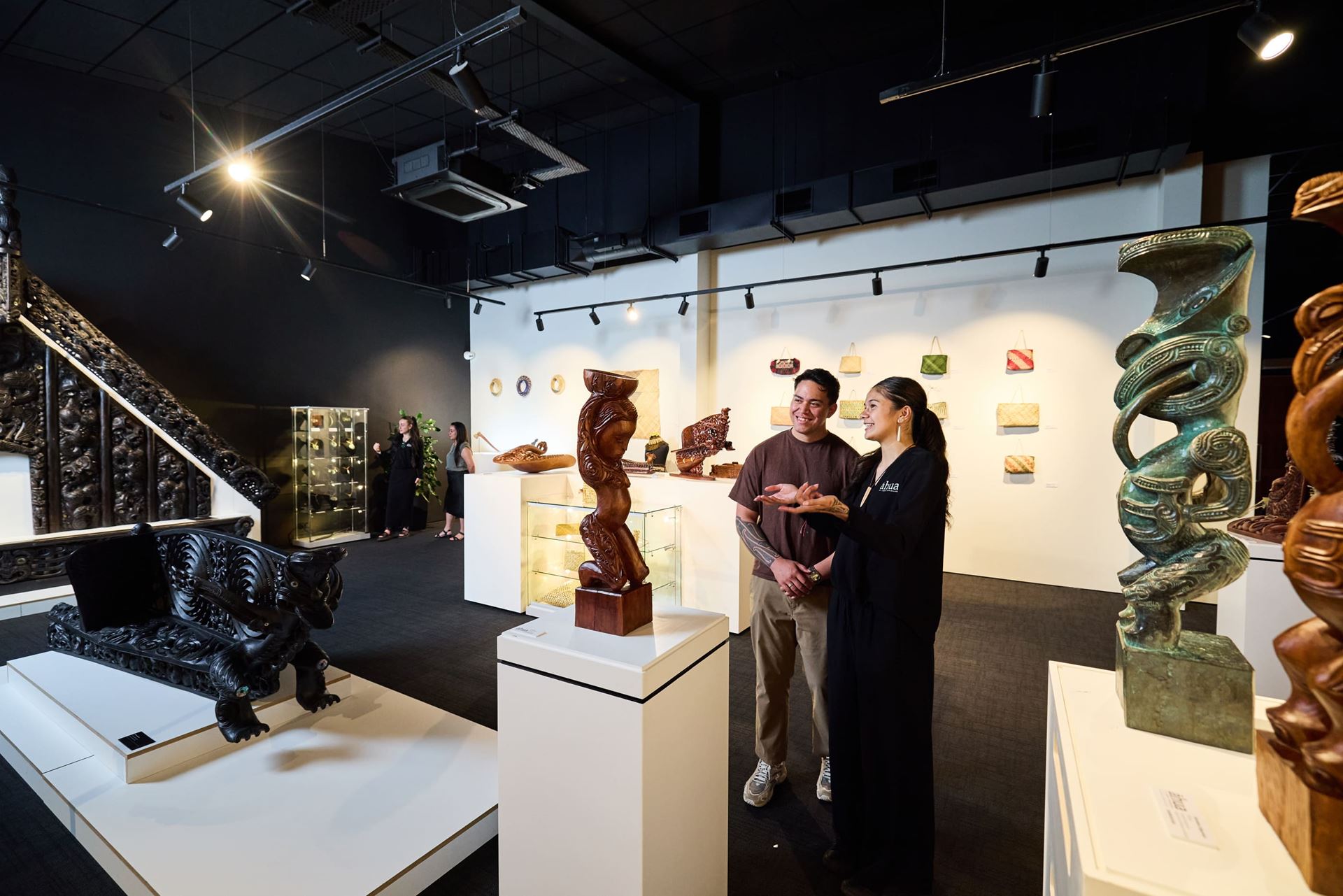
Āhua Gallery
Select Subcategory
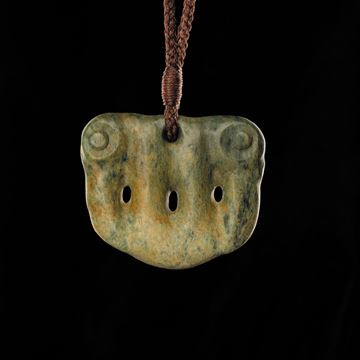
Pekapeka - 8575HW
The Pekapeka (native NZ bat) represents the interwoven nature of the spirit world and the world of the living – the seen and the unseen. The bat was interpreted by Māori as a creature who symbolically acted as an interface between the two worlds and whose physiology (which does not possess the gift of sight) appeared to be guided by the ethereal and the metaphysical.
Material: Pounamu (Kawakawa)
Measurements: 68mm x 40mm x 7mm
$370.00
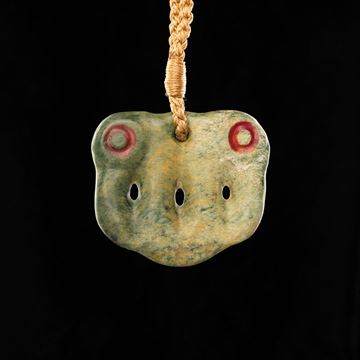
Pekapeka - 8576HW
The Pekapeka (native NZ bat) represents the interwoven nature of the spirit world and the world of the living – the seen and the unseen. The bat was interpreted by Māori as a creature who symbolically acted as an interface between the two worlds and whose physiology (which does not possess the gift of sight) appeared to be guided by the ethereal and the metaphysical.
Material: Pounamu (Matie)
Measurements: 44mm x 51mm
$400.00
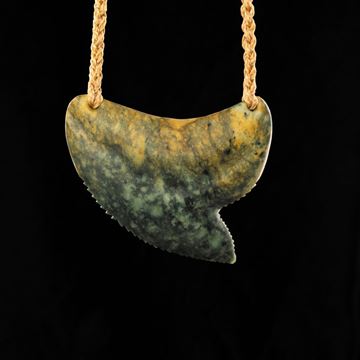
Niho Mango - 7707HW
Shark teeth were highly sought after to wear as a symbol of prestige for personal adornment. They were reflective of the mana of the shark itself.
Material: Pounamu (NZ Jade)
Measurements: 65mm x 61mm
$540.00
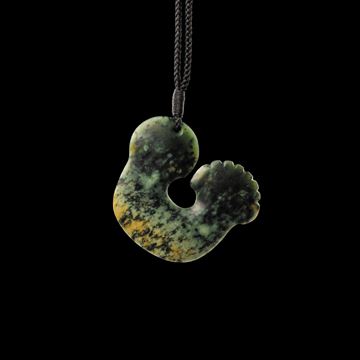
Hei Matau - 7746HW
Coastal and river-based Māori tribes traditionally used a variety of fishhooks and lures. Hooks and lures varied in shape, material and design. Today hei matau (fishhooks) have become symbolic of traditional Māori technology and continue to symbolize a relationship to Tangaroa, God of the sea.
Material: Kotingotingo (Kawakawa)
Measurements: 66mm x 55mm
$465.00
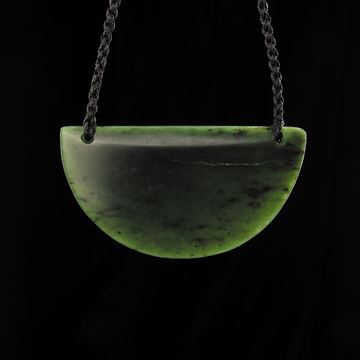
Ripi - 7703HW
Ripi (cutting instrument) are used for cutting and scraping. They are the perfect tool to cut through harakeke; it was also used in ceremonial traditions such as the cutting of the umbilical cord.
Material: Pounamu (Kawakawa)
Measurements: 85mm x 47mm
$600.00
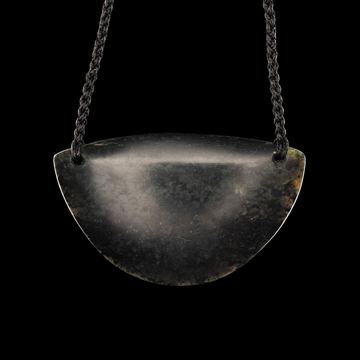
Ripi - 7705HW
Ripi (cutting instrument) are used for cutting and scraping. They are the perfect tool to cut through harakeke; it was also used in ceremonial traditions such as the cutting of the umbilical cord.
Material: Pounamu (Kawakawa)
Measurements: 86mm x 52mm
$570.00