
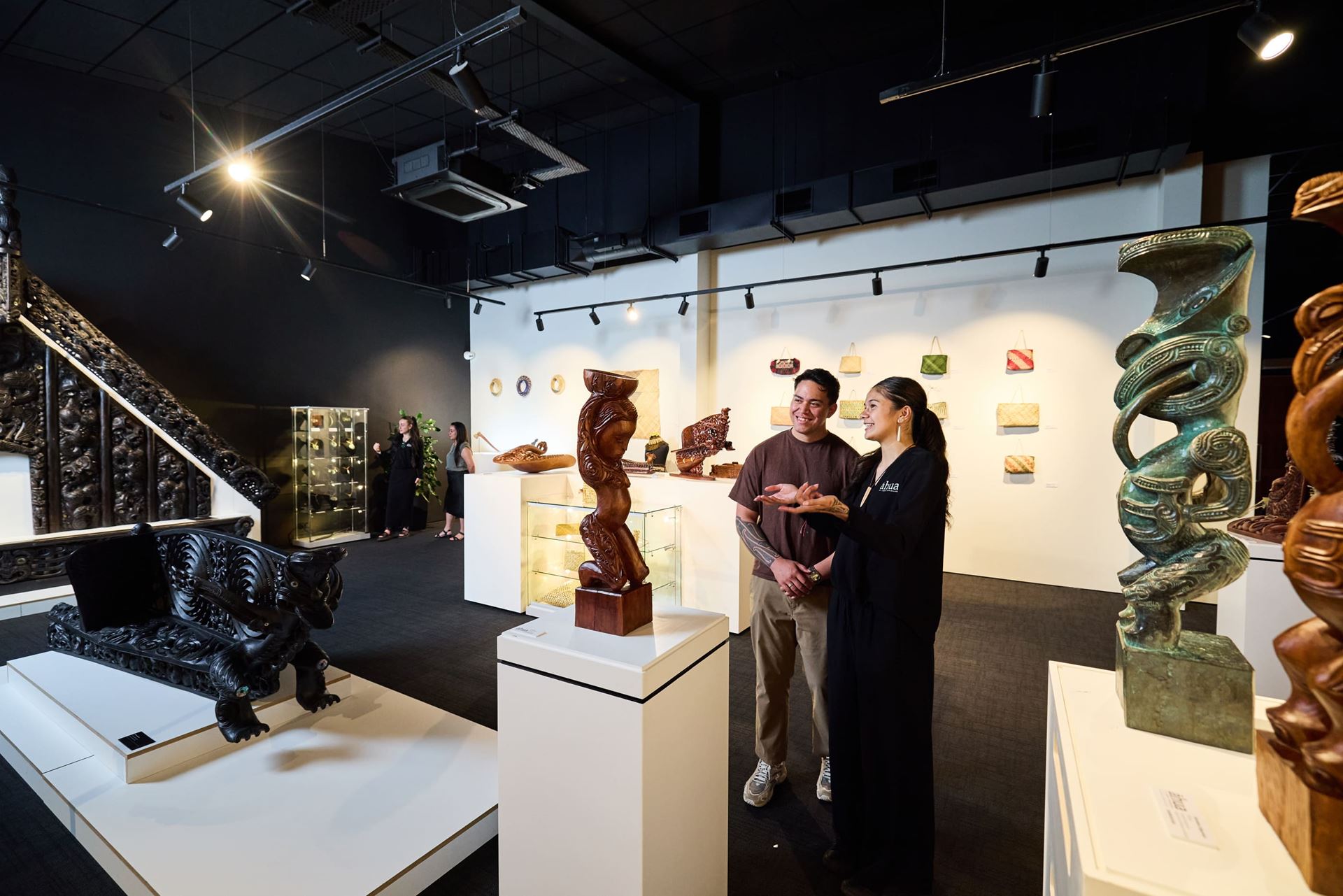
Āhua Gallery
Select Subcategory
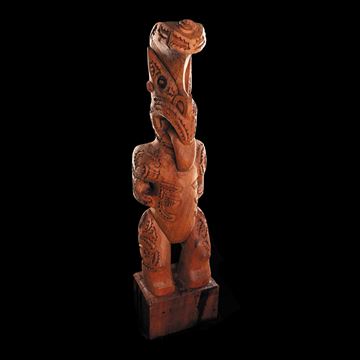
Tekoteko - 6359HH
The tekoteko is a stylised representation of the main progenitor of a tribe and is the most focal point of the whare whakairo (carved tribal meeting house). They can be found – on traditional meeting houses – either at the highest point at the front apex of the roof or at the front central post. They can also be found at the base of the poutokomanawa (the main central ridge support post) of the house.
Material: Tōtara
Measurements: 150mm x 100mm x 580mm
$2,500.00
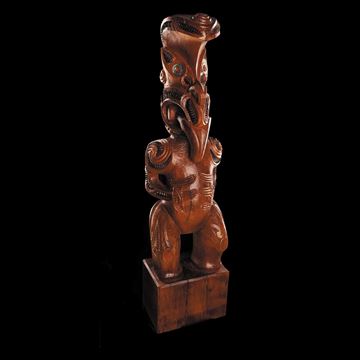
Tekoteko - 6361RS
The tekoteko is a stylised representation of the main progenitor of a tribe and is the most focal point of the whare whakairo (carved tribal meeting house). They can be found – on traditional meeting houses – either at the highest point at the front apex of the roof or at the front central post. They can also be found at the base of the poutokomanawa (the main central ridge support post) of the house.
Material: Tōtara
Measurements: 150mm x 100mm x 580mm
$3,500.00
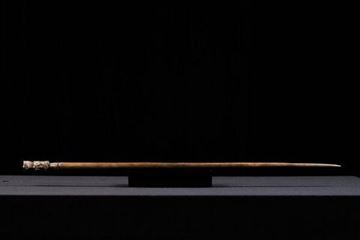
Pāpaka (ed. 2/12) - 4080FD
Pāpaka (crab catching stick) originated in Hawaiki (the original homeland of Māori). Rēhua (the god of fish) handed a pāpaka to a rangatira (chief) before his journey to Aotearoa. This pāpaka is part of a limited edition of 12 bronze casts from an original wood carving by Kawana Waititi. The original will remain part of the New Zealand Māori Arts and Crafts Institute legacy collection.
$3,900.00
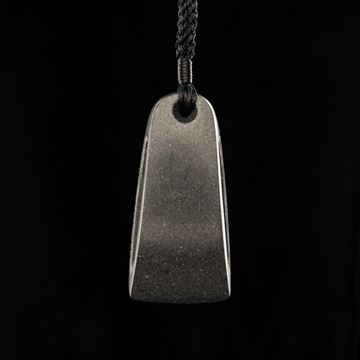
Toki - 6572IA
The toki pendent is based on the form of the carving chisel used in whakairo (Māori carving).
Material: Ōnewa (Greywacke)
Measurements:62mm x 28mm x 12mm
$445.00
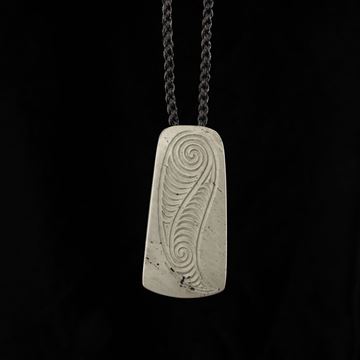
Toki - 6573IA
The toki pendent is based on the form of the carving chisel used in whakairo (Māori carving).
Material: Pakohe (Argillite)
Measurements: 50mm x 21mm x 11mm
$331.00
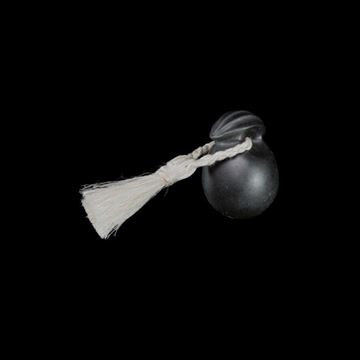
Māhē - 4501HW
Māhē are sinker stones used to weigh down fishing nets.
Material: Otaua (Greywacke)
Measurements: 50mm x 37mm x 35mm
$490.00
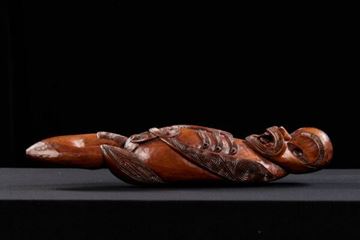
Waka Tūpāpaku - CI3348
A waka tūpāpaku is a box used for containing the bones of a person of high rank after they had been exposed on the atamira platform, the flesh removed and the bones anointed with oil and red ochre, placed in a waka tūpāpaku and taken to a tribal buriel cave.
Material: Tōtara
Measurements: 580mm x 140mm x 110mm
$2,500.00
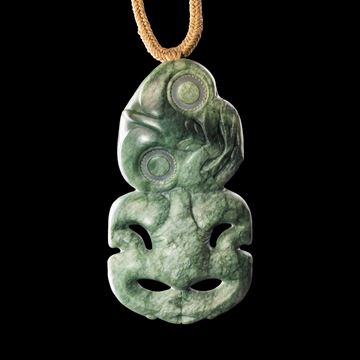
Hei Tiki - 5877SG
Hei tiki are the best known of all Māori adornments. Tiki are symbols of fertility that depict a new-born child. They are often family heirlooms bearing personal names and embodying their wearers lineage. As with most Māori personal adornments, hei tiki are often passed down generationally.
Material: Pounamu (Tokatea)
Measurements: 80mm x 48mm x 8mm
$3,500.00
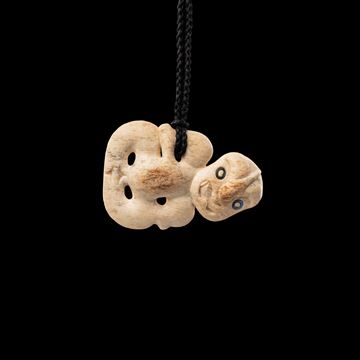
Hei Tiki - 6525HF
Hei tiki are the best known of all Māori adornments. Tiki are symbols of fertility that depict a new-born child. They are often family heirlooms bearing personal names and embodying their wearers lineage. As with most Māori personal adornments, hei tiki are often passed down generationally.
Material: Parāoa (Whale Bone)
Measurements: 73mm x 43mm
$1,205.00
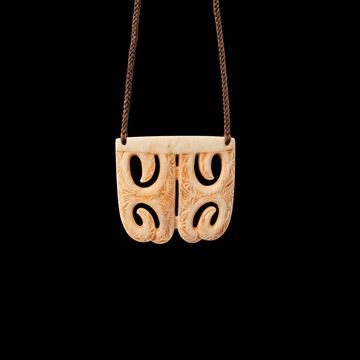
Moko Kauae - 6512HF
Traditionally women who acquired moko kauae (female chin tattoos) received them based on their mana, established through their whakapapa. They were nominated by the hapū to ensure there was a woman of mana to represent them on the marae.
Material: Parāoa (Whale Bone)
Measurements: 49mm x57mm
$1,546.00
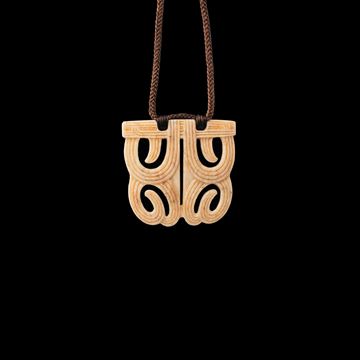
Moko Kauae - 6528HF
Traditionally women who acquired moko kauae (female chin tattoos) received them based on their mana, established through their whakapapa. They were nominated by the hapū to ensure there was a woman of mana to represent them on the marae.
Material: Parāoa (Whale Bone)
Measurements: 50m x 55mm
$1,604.00