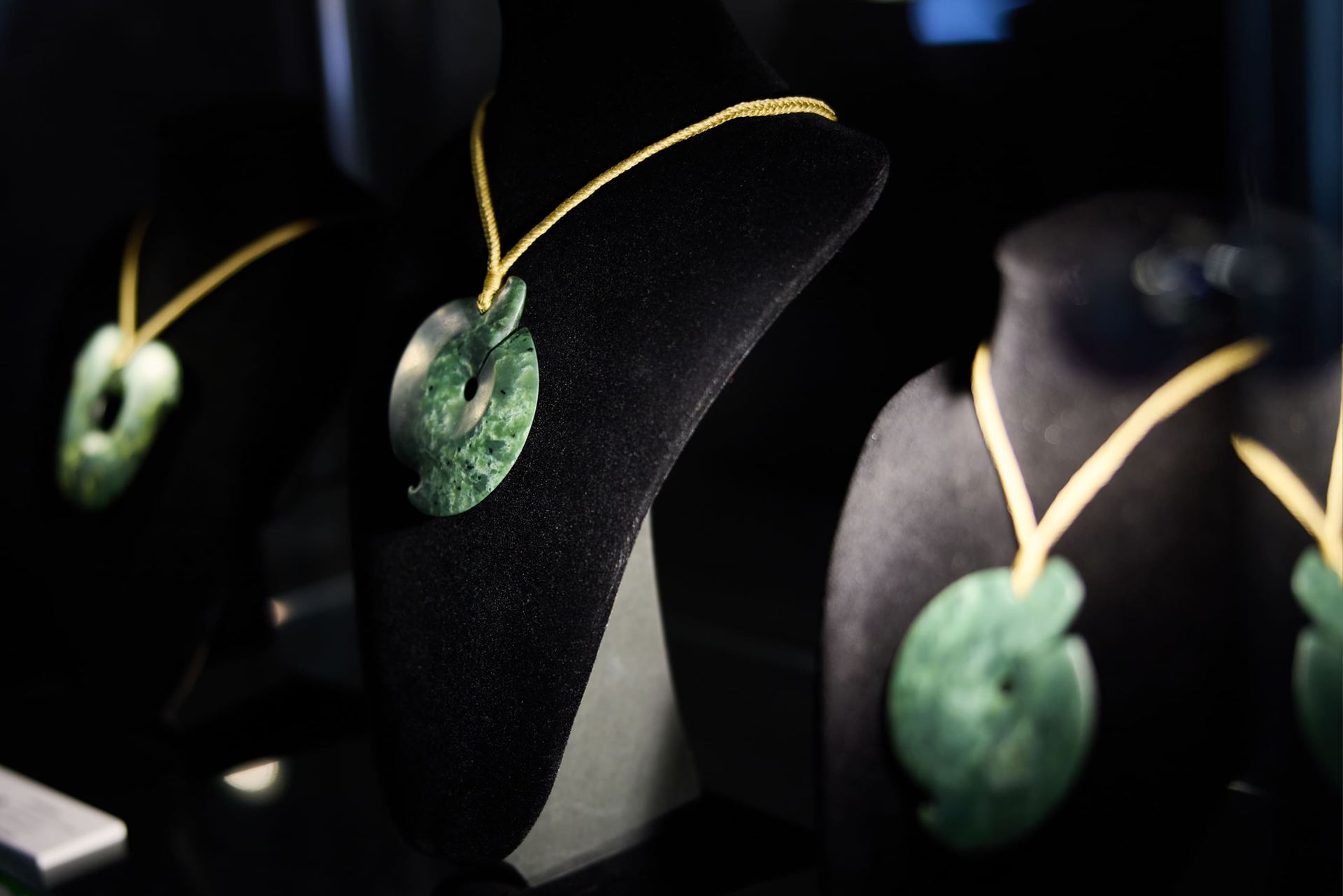
Pounamu - Jade
At Te Takapū, students learn the revered tradition of carving pounamu (Nephrite-Jade/Greenstone), bone and stone. This tohu (qualification) is for two years and is approximately 40 hours per week, 47 weeks of the year.
Like something special? Commission your own special piece here
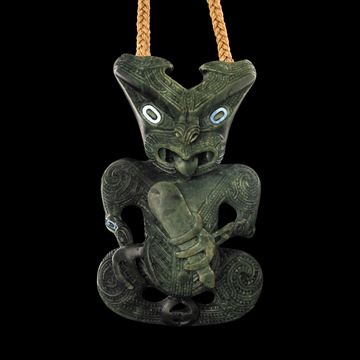
Hei Poupou - 6739PD
The interior walls of the whare whakairo (carved meeting house) are adorned with carvings called poupou. Each poupou in a meeting house connects to a common ancestor, after whom the house was named. Spaced evenly along the inside walls, each poupou supported a rafter panel which extended from the main central ridge, reinforcing the importance of whakapapa (genealogy) to the living generations.
Material: Pounamu (Kawakawa)
Measurements: 112mm x 68mm
$9,244.00
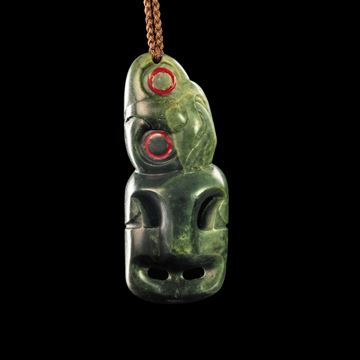
Hei Tiki - 6178KH
Hei tiki are the best known of all Māori adornments. Tiki are symbols of fertility that depict a new-born child. They are often family heirlooms bearing personal names and embodying their wearers lineage. As with most Māori personal adornments, hei tiki are often passed down generationally.
Material: Pounamu (Kawakawa)
Measurements: 95mm x 40mm x 16mm
$2,300.00
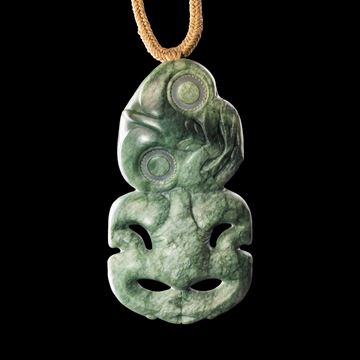
Hei Tiki - 5877SG
Hei tiki are the best known of all Māori adornments. Tiki are symbols of fertility that depict a new-born child. They are often family heirlooms bearing personal names and embodying their wearers lineage. As with most Māori personal adornments, hei tiki are often passed down generationally.
Material: Pounamu (Tokatea)
Measurements: 80mm x 48mm x 8mm
$3,500.00
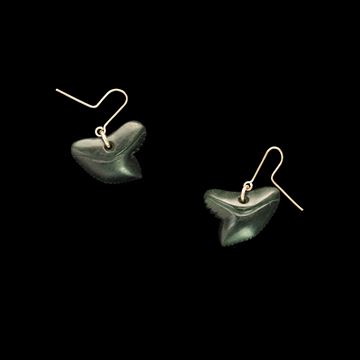
Tiger Shark Earrings - 4543IA
Shark teeth were highly sought after to wear as a symbol of prestige for personal adornment. They were reflective of the mana of the shark itself.
Material: Pounamu (Kawakawa)
Measurements: 12mm x 25mm x 6mm
$390.00
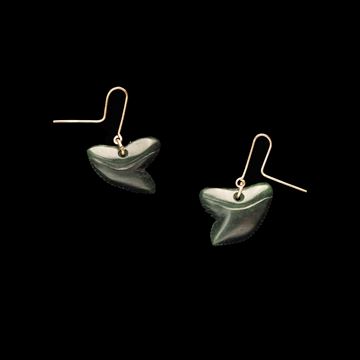
Tiger Shark Earrings - 4544IA
Shark teeth were highly sought after to wear as a symbol of prestige for personal adornment. They were reflective of the mana of the shark itself.
Material: Pounamu (Kawakawa)
Measurements: 12mm x 25mm x 6mm
$390.00
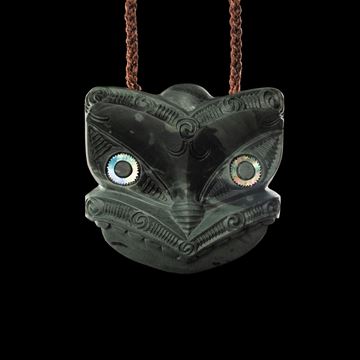
Wheku - 7863MA
In Māori carving there are three predominant designs for heads: the 'wheku' with its long eyes; the 'koruru' with its round eyes; and, the 'ruru', which also has round eyes but with a point at the top. The different designs were used by carvers to illustrate the character of the subject they were carving. The long eyes of the wheku were often used to depict a squint or frown.
Material: Ōnewa (Graywacke)
Measurements: 61mm x 62mm x 13mm
$1,425.00
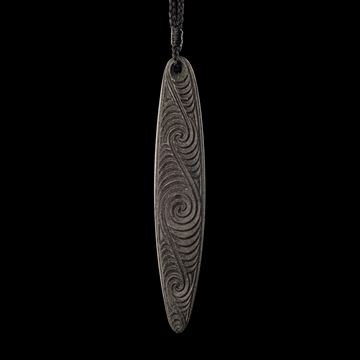
Kurupapa - 7603IA
Kurupapa are long slender pendants typically crafted from pounamu (NZ Jade) or bone. Customarily they were very popular personal adornments. Kurupapa are still commonly worn as pendants and earrings. As with most Māori personal adornments kurupapa are often passed down generationally.
Material: Onewa (Greywacke)
Measurements: 100mm x 19mm x 9mm
$600.00
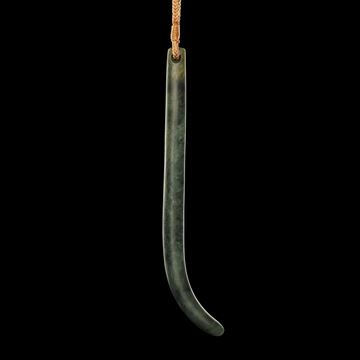
Kuru - 7202LT
Kurupapa are long slender pendants typically crafted from pounamu (NZ Jade) or bone. Customarily they were very popular personal adornments. Kurupapa are still commonly worn as pendants and earrings. As with most Māori personal adornments kurupapa are often passed down generationally.
Material: Pounamu (Kawakawa)
Measurements: 140mm x 11mm
$484.00
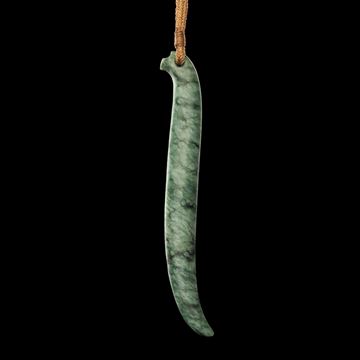
Manu - 7308SF
This manu (bird) form is a variation of the kapeu which are slender adornments with a slight bend at the bottom and were often worn as ear pendants. This kapeu has been fashioned from pounamu (New Zealand Jade). Kapeu were highly prized and a sign of high rank in Māori society. They are commonly also worn as neck pendants.
Material: Pounamu (Kawakawa)
Measurements: 120mm x 15mm x 8mm
$485.00
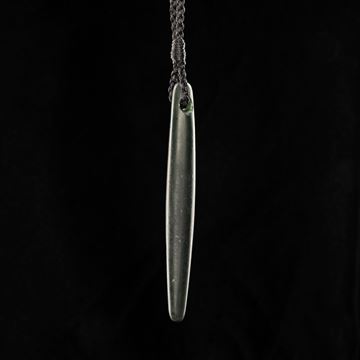
Kuru - 7153LA
Kurupapa are long slender pendants typically crafted from pounamu (NZ Jade) or bone. Customarily they were very popular personal adornments. Kurupapa are still commonly worn as pendants and earrings. As with most Māori personal adornments kurupapa are often passed down generationally.
Material: Pounamu (Kawakawa)
Measurements: 77mm x 10mm
$375.00
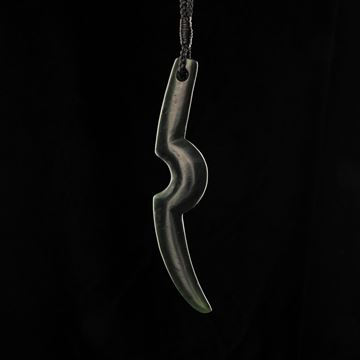
Whakakaipiko - 7159LA
Whakakaipiko (Aupiko) forms were given as a symbol of endearment. Whakakaipiko are long and slender personal adornments characterised by a ‘piko’ or kink in the body of the pendant. Customarily they were used as a pin for fastening cloaks and may be made from bone, stone, wood or shell. Whakakaipiko are commonly worn as pendants.
Material: Pounamu (Kawakawa)
Measurements: 92mm x 13mm
$471.00
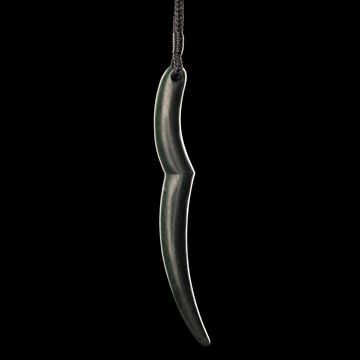
Whakakaipiko - 7210LT
Whakakaipiko (Aupiko) forms were given as a symbol of endearment. Whakakaipiko are long and slender personal adornments characterised by a ‘piko’ or kink in the body of the pendant. Customarily they were used as a pin for fastening cloaks and may be made from bone, stone, wood or shell. Whakakaipiko are commonly worn as pendants.
Material: Pounamu (Kawakawa)
Measurements: 125mm x 13mm
$568.00
- 1
- 2