Te Takapū - National Stone & Bone Carving School
Select Subcategory
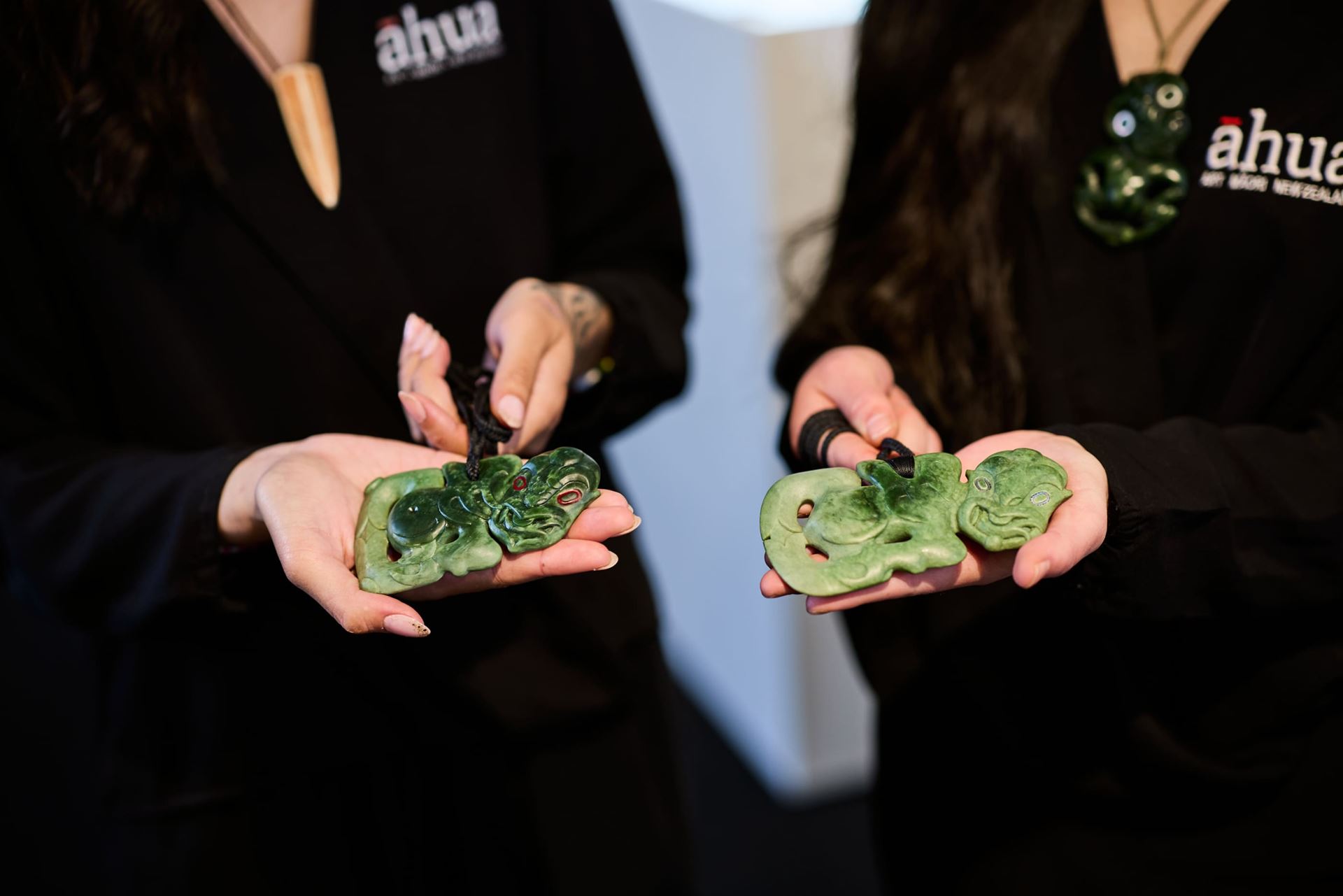
At Te Takapū, students learn the revered tradition of carving pounamu (Nephrite-Jade/Greenstone), bone and stone.
The school opened on 5 October 2009, expanding on NZMACI’s commitment to maintaining, developing and promoting the arts, crafts and culture of iwi Māori (Māori tribes) as mandated by the New Zealand Maori Arts and Crafts Institute Act (1963) (History).
The school was first led by Lewis Gardiner who is a well-regarded pounamu artist of his generation.
Stacy Gordine, a renowned artist from the East Coast of New Zealand – and uri of Hone Te Kauru and Pine Taiapa – now leads the programme and is shaping the direction of the wānanga into the future.
Would you like something custom made especially for you? Commission a piece here
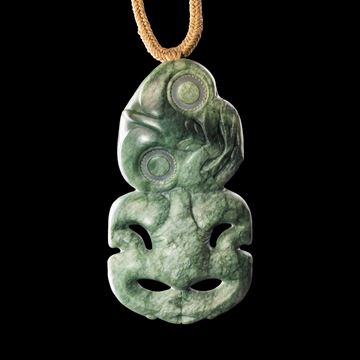
Hei Tiki - 5877SG
Hei tiki are the best known of all Māori adornments. Tiki are symbols of fertility that depict a new-born child. They are often family heirlooms bearing personal names and embodying their wearers lineage. As with most Māori personal adornments, hei tiki are often passed down generationally.
Material: Pounamu (Tokatea)
Measurements: 80mm x 48mm x 8mm
$3,500.00
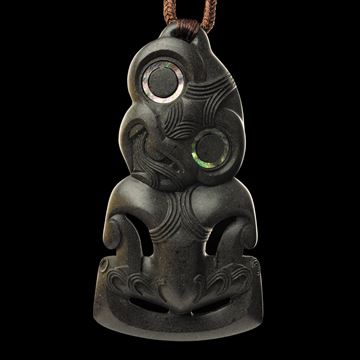
Hei Tiki - 6177KH
Hei tiki are the best known of all Māori adornments. Tiki are symbols of fertility that depict a new-born child. They are often family heirlooms bearing personal names and embodying their wearers lineage. As with most Māori personal adornments, hei tiki are often passed down generationally.
Material: Onewa (Graywacke)
Measurements: 183mm x 101mm x 25mm
$3,500.00
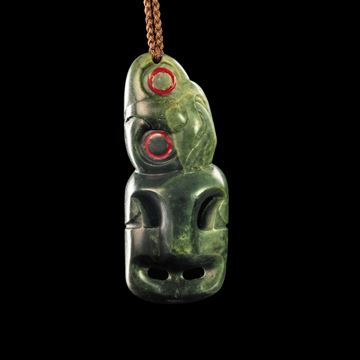
Hei Tiki - 6178KH
Hei tiki are the best known of all Māori adornments. Tiki are symbols of fertility that depict a new-born child. They are often family heirlooms bearing personal names and embodying their wearers lineage. As with most Māori personal adornments, hei tiki are often passed down generationally.
Material: Pounamu (Kawakawa)
Measurements: 95mm x 40mm x 16mm
$2,300.00
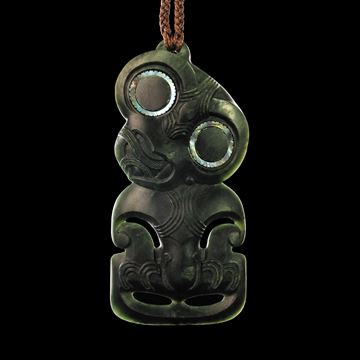
Hei Tiki - 6184KH
Hei tiki are the best known of all Māori adornments. Tiki are symbols of fertility that depict a new-born child. They are often family heirlooms bearing personal names and embodying their wearers lineage. As with most Māori personal adornments, hei tiki are often passed down generationally.
Material: Pounamu (Kawakawa)
Measurements: 140mm x 67mm x 15mm
$3,200.00
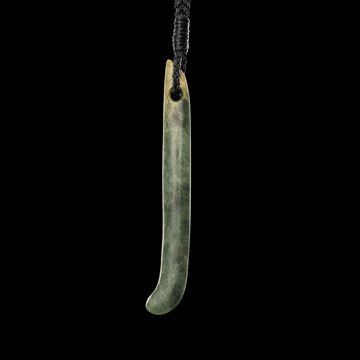
Kapeu - 7156LA
Kapeu are slender adornments with a slight bend at the bottom and were often worn as ear pendants. Kapeu were highly prized and a sign of high rank in Māori society. They are commonly also worn as neck pendants. As with most Māori personal adornments kapeu are often passed down generationally
Material: Pounamu (Matie)
Measurements: 71mm x 9mm
$432.00
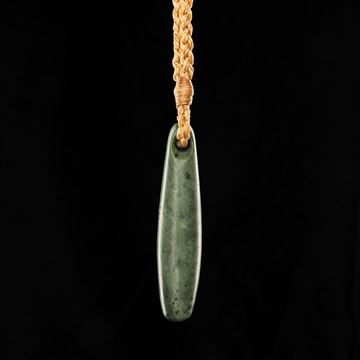
Kuru - 6332HW
This manu (bird) form is a variation of the kapeu which are slender adornments with a slight bend at the bottom and were often worn as ear pendants. This kapeu has been fashioned from pounamu (New Zealand Jade). Kapeu were highly prized and a sign of high rank in Māori society. They are commonly also worn as neck pendants.
Material: Pounamu (Kawakawa)
Measurements: 65mm X 15mm
$415.00
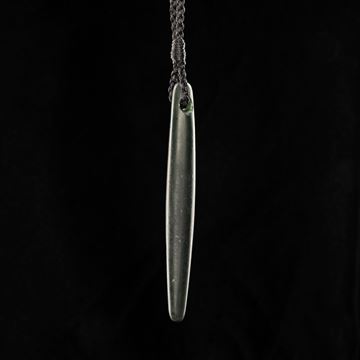
Kuru - 7153LA
Kurupapa are long slender pendants typically crafted from pounamu (NZ Jade) or bone. Customarily they were very popular personal adornments. Kurupapa are still commonly worn as pendants and earrings. As with most Māori personal adornments kurupapa are often passed down generationally.
Material: Pounamu (Kawakawa)
Measurements: 77mm x 10mm
$375.00
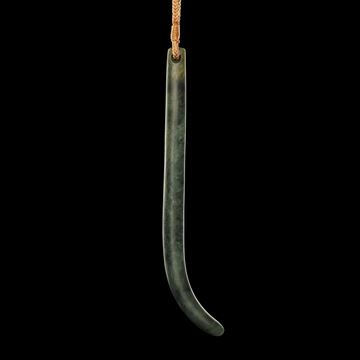
Kuru - 7202LT
Kurupapa are long slender pendants typically crafted from pounamu (NZ Jade) or bone. Customarily they were very popular personal adornments. Kurupapa are still commonly worn as pendants and earrings. As with most Māori personal adornments kurupapa are often passed down generationally.
Material: Pounamu (Kawakawa)
Measurements: 140mm x 11mm
$484.00