
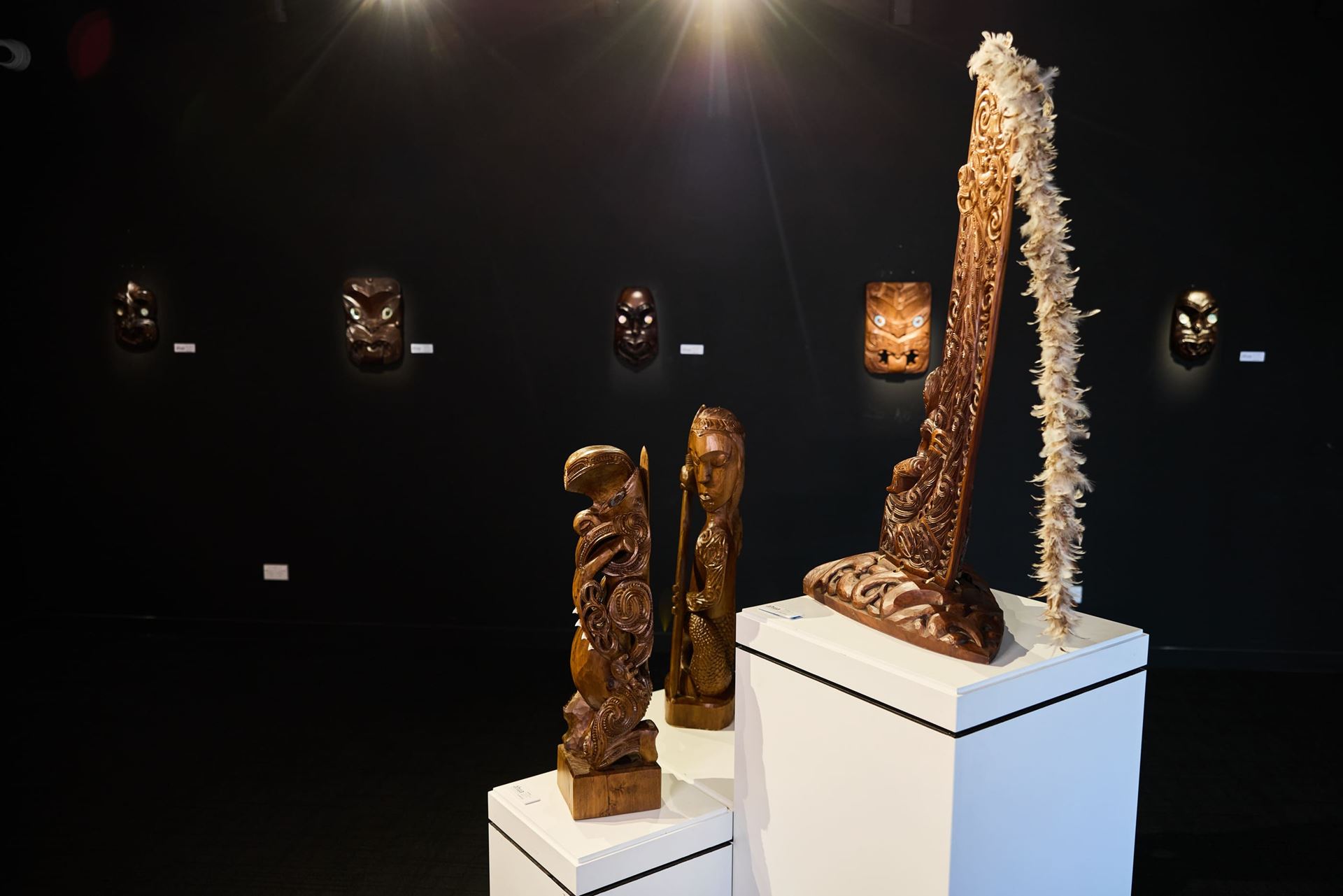
Whakairo Rākau - National Wood Carving School
Since the first intake at Te Wānanga Whakairo, many young Māori from iwi (tribes) throughout New Zealand have been taught the Māori practice of wood carving under the expert guidance of master carvers who were once trainees at the school. This tohu (qualification) is for three years and is 40 hours per week, 47 weeks of the year.
Would you like something custom made just for you? Commission a piece here
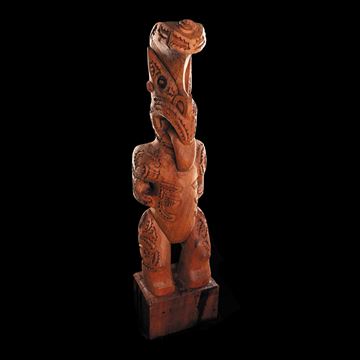
Tekoteko - 6359HH
The tekoteko is a stylised representation of the main progenitor of a tribe and is the most focal point of the whare whakairo (carved tribal meeting house). They can be found – on traditional meeting houses – either at the highest point at the front apex of the roof or at the front central post. They can also be found at the base of the poutokomanawa (the main central ridge support post) of the house.
Material: Tōtara
Measurements: 150mm x 100mm x 580mm
$2,500.00
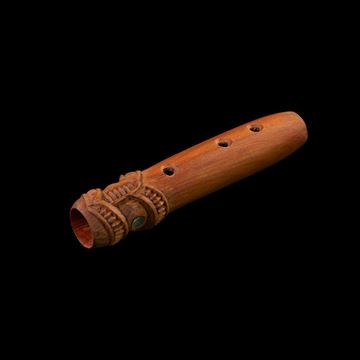
Kōauau 5859HY
Kōauau are part of the flute family and come to us from the atua (spiritual entity) of flute music Hine Raukatauri. Kōauau is also the name for a species of hollow kelp, which can also be used to make instruments. Kōauau are made from a variety of different materials including wood, bone or sometimes stone. Most Kōauau have 3 wenewene (finger holes) although there are several older examples that have 4 or more. The kaiwhakangāwari is the wenewene closest to the mouth, the kaiwhakahī is the middle wenewene and the kaiwhakakaha is the wenewene closest to the distal end.
There are many uses for kōauau. In Māori tradition, birds are sometimes seen as important messengers from the spirit world. Kōauau have a reputation of attracting the native birds of Aotearoa. The birds will often interact with the beautiful melody from the kōauau, giving us a glimpse of the spiritual aspects of the kōauau song.
Material: Mataī (NZ Native)
Measurements: 123mm x 26mm x 26mm
$850.00
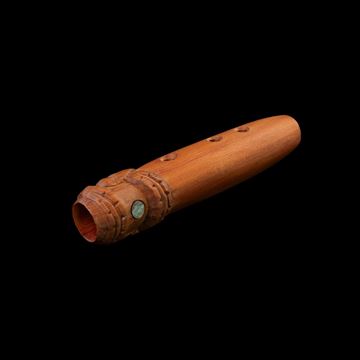
Kōauau 4439HY
Kōauau are part of the flute family and come to us from the atua (spiritual entity) of flute music Hine Raukatauri. Kōauau is also the name for a species of hollow kelp, which can also be used to make instruments. Kōauau are made from a variety of different materials including wood, bone or sometimes stone. Most kōauau have three wenewene (finger holes) although there are several older examples that have four or more. The kaiwhakangāwari is the wenewene closest to the mouth, the kaiwhakahī is the middle wenewene and the kaiwhakakaha is the wenewene closest to the distal end.
There are many uses for kōauau. In Māori tradition, birds are sometimes seen as important messengers from the spirit world. Kōauau have a reputation of attracting the native birds of Aotearoa. The birds will often interact with the beautiful melody from the kōauau, giving us a glimpse of the spiritual aspects of the kōauau song.
Material: Mataī (NZ Native)
Measurements: 123mm x 26mm x 26mm
$850.00