
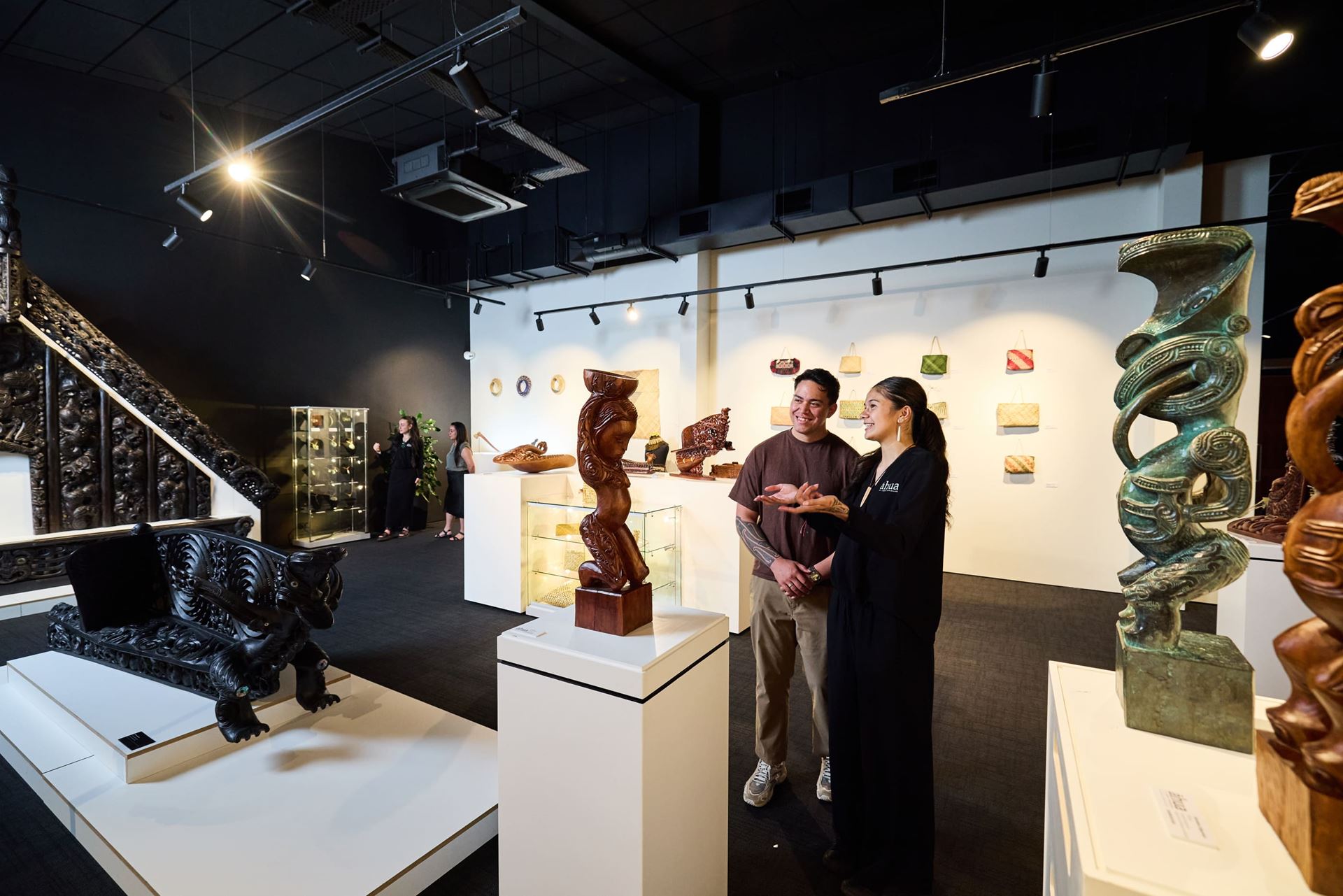
Āhua Gallery
Select Subcategory
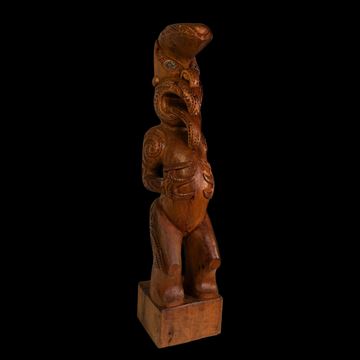
Tekoteko - 4813HG
The tekoteko is a stylised representation of the main progenitor of a tribe and is the most focal point of the whare whakairo (carved tribal meeting house). They can be found – on traditional meeting houses – either at the highest point at the front apex of the roof or at the front central post. They can also be found at the base of the poutokomanawa (the main central ridge support post) of the house.
Material: Tōtara
Measurements: 865mm x 210mm x 180mm
$4,200.00
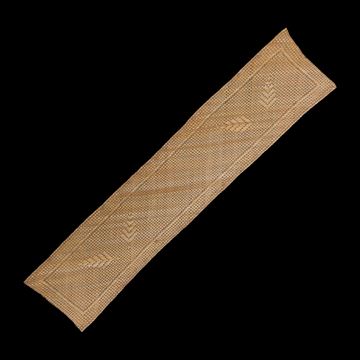
Takapapa - 5129HM
In former times, marae had no wharekai (dining halls) to what we are familiar with today. During those times, specific ‘food mats’ were laid out in the middle of the wharenui (meeting house) and the food for the manuhiri (guest) was placed on them. This takapapa has been weaved to be used as a table runner.
Material: Harakeke
Measurements: 1110mm x 230mm
$750.00
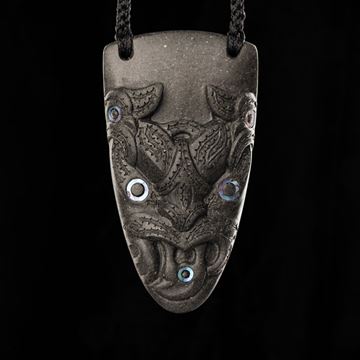
Rei Puta Wheku - 7706HW
The mark of a high Chief was one who wore the Rei Puta (whale tooth pendant), as the teeth of the Sperm Whale were highly prized because of their rarity. With actual whale teeth being such a rarity, it became common to fashion the tooth form from other materials.
Material: Onewa (NZ Greywacke)
Measurements: 88mm x 48mm
$1,655.00
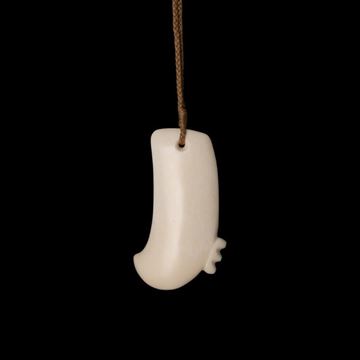
Rei Niho - 3789IA
The mark of a high Chief was one who wore the hei niho (whale tooth pendant), as the teeth of the sperm whale were highly prized because of their rarity. Usually these pendants had simply etched out eyes to form a head at one end. With actual whale teeth being such a rarity, it became common to fashion the tooth form from other materials.
Material: Koiwi (Beef Bone)
Measurements: 67mm x 40mm
$250.00
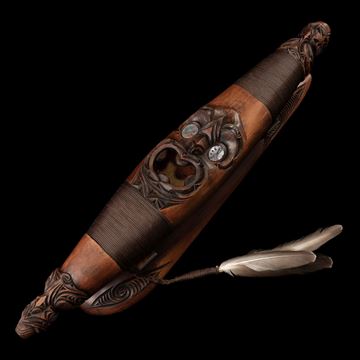
Pūtōrino (on Stand) - 4799KA
In Māori whakapapa (genealogy), all Māori flutes come to us from Hine Raukatauri, the daughter of Tānemahuta, the atua (spiritual entity) of the forest and birds. Hine Raukatauri is best known as the atua of flute music. She loved her flute so much that she chose to live inside it. She is now personified as the case moth that hangs from branches of trees in a long slender cocoon. This case moth cocoon is where the pūtōrino gets its shape from.
Material: Mataī (NZ Native)
Measurements: 400mm x 70mm x 50mm
$7,990.00
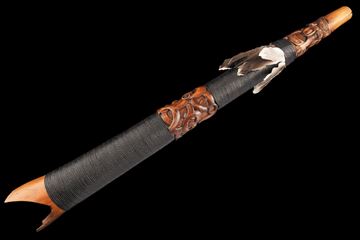
Pūkaea - 4798TJ
The pūkaea was the largest of the Māori trumpets, ranging in size from one metre (3.2ft) to over two meters (3.4ft) in length. They were made in two pieces and bound together with the roots of the kiekie (climber). Many pūkaea were carved and they often belonged to the chief of a tribe. They were typically used to call the tribe together.
Material: Matai
Measurements: 600mm x 70mm x 60mm
$5,900.00
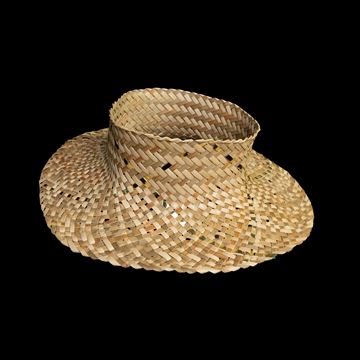
Pōtae - 6779AY
This Pōtae is a contemporary hat woven with traditional Māori weaving methods.
Material: Harakeke & Metallic Foil
Circumference: 21 inches (53cm)
$390.00
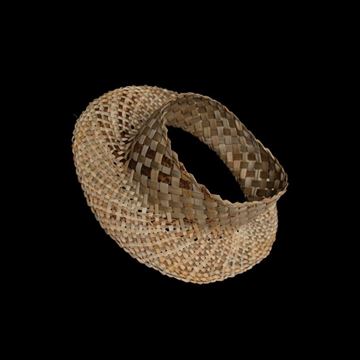
Pōtae - 5143ML
This Pōtae is a contemporary hat woven with traditional Māori weaving methods.
Material: Harakeke
Circumference: 21.5 inches
$250.00
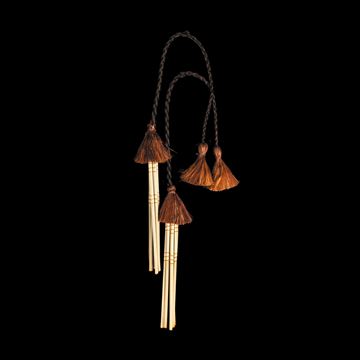
Poi Piu - 5833RW
Poi piu are simple poi made from the hardened and curled piupiu strands of flax. Poi piu was used as percussion instruments played to the beat of Māori chanting.
Material: Harakeke & Muka
Measurements: 650mm Long
$495.00
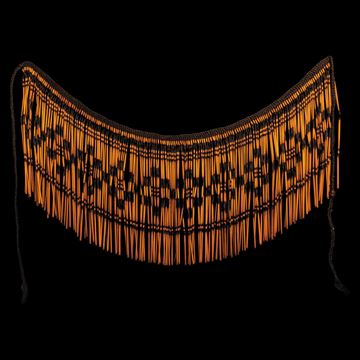
Piupiu (Tāne) - 5832RW
The word 'piupiu' means 'to swing’ and is also the name for a skirt with free-hanging strands. Piupiu can be worn either around the waist or across one shoulder. They were made in many types of material and styles.
Material: Harakeke & Muka
Measurements: 1100mm x 420mm or 43 inches
$1,890.00
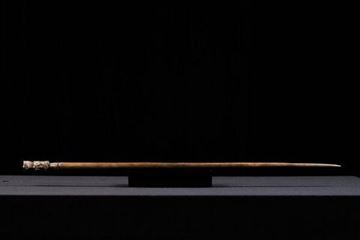
Pāpaka (ed. 2/12) - 4080FD
Pāpaka (crab catching stick) originated in Hawaiki (the original homeland of Māori). Rēhua (the god of fish) handed a pāpaka to a rangatira (chief) before his journey to Aotearoa. This pāpaka is part of a limited edition of 12 bronze casts from an original wood carving by Kawana Waititi. The original will remain part of the New Zealand Māori Arts and Crafts Institute legacy collection.
$3,900.00